Low-income and rural commuters ‘most vulnerable to weather events’
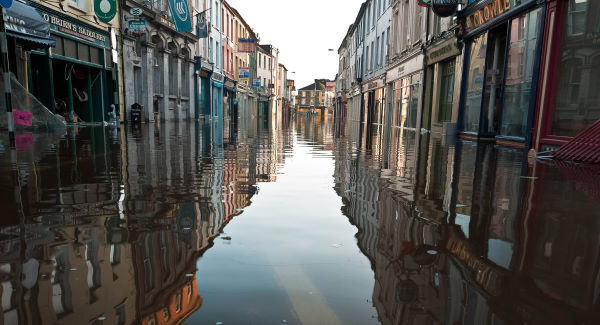
A new study has found that in areas badly affected by flooding, commuters can face extra costs amounting to almost 39% of their daily earnings during the period of disruption, with those on lower incomes suffer proportionately greater losses.
The research looked at Galway as an example and measured both monetary and time costs associated with road flooding.
It took time-stamped road closure data collected by Galway County Council in the aftermath of Storm Desmond in December 2015 and combined it with census data from the Central Statistics Office and previously gathered income data.
Setting “subjective value of travel time (SVTT) values” for commuting in Galway at €21.20 per hour for city commuters and €6.07 per hour in rural areas, it restricted the sample to those travelling by cars and buses and to journeys that start and end within Co Galway.
The overall sample comprised of 48,000 individuals and looked at road restrictions caused by flooding over a 17-working-day period of disruption from December 9, 2015, to January 5, 2016.
“After the commuting disruption, some commuters spend an extra 30–60 min per day commuting,” it said, adding that those in rural areas and those already facing longer commutes were worst affected.
“The effect of the disruption due to flooding on commuters living in Galway city was relatively small,” it said.
“In contrast, commuters living in rural areas and small towns or villages were worst affected.
“The additional journey time for commuters living in villages was 157 minutes on average, due to the flooding, compared to just 10 additional minutes commuting time due to flooding on average for those living in Galway city.”
Converting those delays to monetary costs using SVTT and transport costs per km, it said: “In the worst affected areas these costs represent 10%-38.5% of the daily working wage.
“This finding highlights the vulnerability to disruptions of commuters living in rural areas, where a lack of transport alternatives can result in an over-reliance on the private car.”
The study, led by researchers based in Galway from Teagasc, NUI Galway, GMIT and the University of Exeter and published in the , warned of the likelihood of increased rainfall events due to climate change and said: “The results are consistent with the narrative that low-income groups are most vulnerable to weather shocks such as flooding.”
CONNECT WITH US TODAY



Be the first to know the latest news and updates