Prices for new homes set to rise 5%
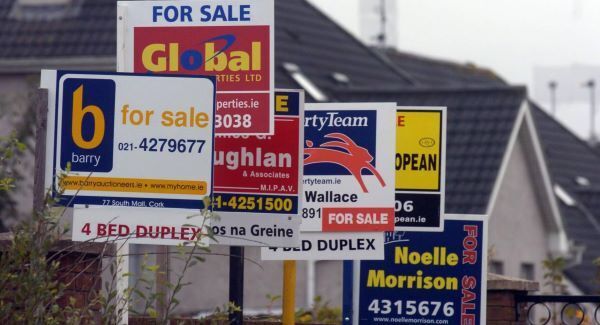
Asking prices for new homes are expected to rise by 5% this year — despite a slight drop in the final three months of 2018.
The news comes as Taoiseach Leo Varadkar said the housing crisis was “easily the biggest challenge” faced by the Government last year.
The average asking price for new sales nationally was €266,000 at the end of 2018, down by €2,000 on the figure from September, according to a MyHome.ie report published in association with Davy.
It warned that any cooling off of property price increases will only see the heat transferring to the rental market.
Despite the dip in the final quarter of 2018, house prices rose overall by 6.1% last year and will increase by another 5% in 2019, according to the report’s author — if the uncertainty surrounding Brexit is resolved.
The report also found that:
- The median asking price for a three-bed semi-detached ranged from €80,000 in Roscommon to €315,000 in Dublin;
- There was a 6.6% rise in house prices and a 5.7% rise in apartments in Dublin across 2018;
- Prices continued to rise in ‘commuter belt counties’ such as Wicklow, where prices are up 7% on the year to €320,000, and Kildare and Meath, which have both seen 4.2% inflation to €250,000;
- In Munster, Limerick saw the highest gain in asking prices, up 22% on the year to €192,500;
- In Tipperary, prices were up 9.1% to €165,000, followed by Kerry (up 5.9% to €180,000), Cork (5.6% rise to €240,000), and Clare (up 5.3% to €179,000), while in Waterford, median asking prices were flat on the year at €170,000;
- In Connacht, Galway asking prices were up by 16% to €230,000, while there were also rises in Roscommon, Leitrim, Mayo, and Sligo;
- In Ulster, there were hikes in Cavan (up 3.3% to €155,000) and Monaghan (2% rise to €150,000), with prices in Donegal flat at €130,000.
Davy chief economist Conall Mac Coille said 2019 will see robust demand and rising household incomes pushing prices higher at more moderate levels, once Brexit has been resolved.
“Predictions that the Dublin market would contract have proved wide of the mark, perhaps because too much attention has been paid to more expensive property types and areas,” said Mr Mac Coille.
“Suggestions that the tightening of the Central Bank lending rules would cause the market to stagnate have also proved to be well wide of the mark.
“We estimate that the value of transactions in 2018 is up by almost 20% and will finish the year just below €18bn versus €14.9bn last year. This represents close to 5% growth in the number of sales.
While the tightening of the CBI lending rules has been successful in taking some of the heat out of residential sales, one serious side effect is that this heat has been transferred to the rental market, with rental inflation set to remain buoyant.
Meanwhile, Mr Varadkar said he hopes the country will look back on last year as the time when the numbers in emergency accommodation peaked.
“Housing was easily the biggest challenge we faced in the year gone by,” he said.
“The numbers in emergency accommodation have been in the 9,000-10,000 range in the last number of months.
"I hope we’ll look back in 2018 as the year in which the number of people homeless and in emergency accommodation stabilised and in 2019 is the year in which the number falls, but that remains to be seen, a lot of work is still to be done on that to increase the supply of housing in particular.
“We anticipate just under 20,000 new homes have been built in Ireland in 2018, and this is the highest for a decade and that doesn’t include student accommodation or ghost estates being brought back into use, it’s pure new builds.
“We’ll increase the social housing stock by about 8,000 more than half new builds by councils and approved housing bodies.”