Lack of support ‘limits the quality of Irish schools’
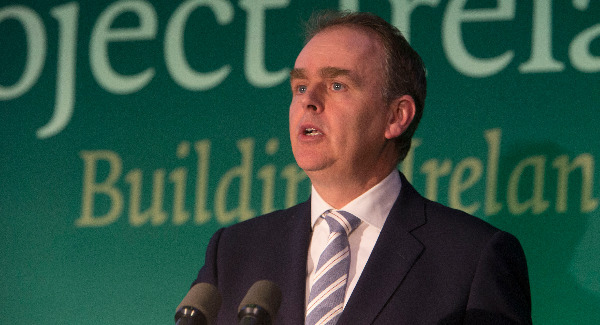
It may not be possible to improve quality in Irish schools unless better local or regional management supports are provided, Department of Education officials have warned Education Minister Joe McHugh.
They believe the largely-untapped legal authority of education and training boards (ETBs) to support schools under other patrons could help solve leadership and governance problems facing many of the country’s 4,000 primary and second-level schools.
However, where it proves difficult to amalgamate small schools, officials have told the minister that local opposition to combining governance functions across neighbouring schools could be problematic.
The warnings come in a briefing document, made public yesterday, on current issues in the Department of Education which was presented to Mr McHugh when he was assigned there in mid-October.
“Any diminution in the number of small schools through amalgamations will help but where this does not prove possible and schools have to be sustained, a potential alternative in order to strengthen governance is the development of a ‘federal board’ responsible for a number of schools in a parish or locality,” the officials wrote.
The manner in which local communities wish to maintain the status quo should not be underestimated in trying to deliver on such a change which logically should be perceived as less threatening than school closures or mergers.
The discussion arose in a section of the document about particular difficulties faced by small primary schools to find suitable volunteers to serve on boards of management.
The department highlighted the high level of volunteerism required in the governance of Irish schools, and said that the public funding it provides to sectoral management bodies that offer supports to schools is quite low.
The minister was told that the structure of the Irish education system is untypical of that in many other developed countries, with the “virtual absence of middle or local tier of government between school and central government”.
“It is questionable whether it is feasible to continue to maintain the system and enhance quality without providing for better local or regional management structures, though still allowing necessary autonomy at school level,” the briefing document states.
It said the lack of management capacity in the system is not just a constraint in relation to resource management in schools, but also in supporting principals and schools in improving school performance and accountability.
There has been very limited use to date of the legal powers given to the 16 ETBs set up in 2013 through the amalgamation of former vocational education committees. The department advised the minister that a key objective of creating ETBs was to enable the sector to provide management supports to schools across different types of patronage in their areas.
“These are very much enabling statutory provisions and are not mandatory on schools,” the minister was told. “Put simply, it will be lawful for an ETB to provide services, provided the school[s] want to obtain from them the service or support in question.”