President Higgins already has plans for second term
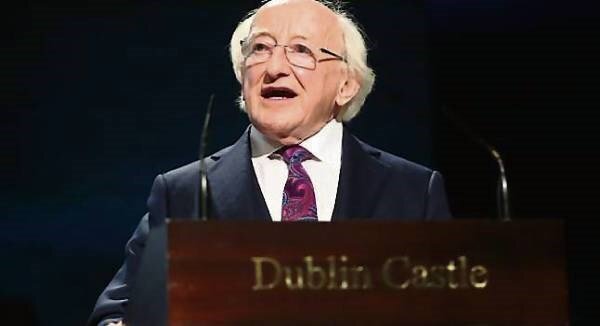
Michael D Higgins is not exactly heading back to the Áras — he never really left.
The country’s ninth president has campaigned for justice and equality throughout his life.
The 77-year-old poet, professor, and campaigner said he would only stand for one term, but, after much speculation, he confirmed in July that he would run again. His campaign for Áras an Uachtaráin officially got under way last month.
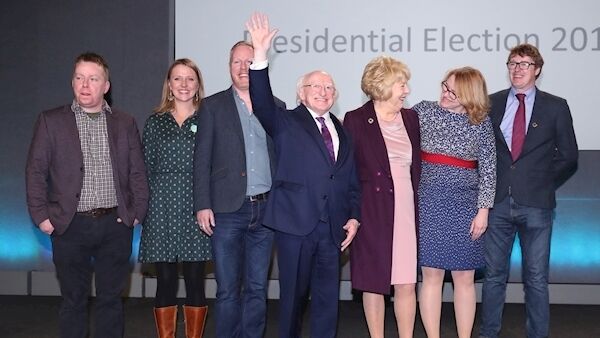
Born in Limerick in the 1940s, Mr Higgins grew up in Limerick and Clare before he moved to Galway to study at University College Galway.
He began his career as an academic in the 1960s and 1970s, teaching political science and sociology in Ireland and the US.
He entered the political arena in the late 1960s, joining the Labour Party and serving as a senator in the 1980s, before representing Galway West in the Dáil from 1987 to 2011.
A fluent Irish speaker, Mr Higgins served as minister for arts, culture, and the Gaeltacht in the 1990s.
He is also a published poet and has presented TV documentaries.
The long-time campaigner for equality was elected president in 2011 after running as a Labour Party candidate.
He secured 701,101 first preference votes which amounted to 39.6% of the vote. In total, he secured 1m votes.
When his 2011 victory was formally announced in Dublin Castle, he said he would be a president for all the people and vowed to lead the country in a necessary transformation away from values based on wealth.
He also said he would attempt to heal the wounds of the Troubles, following in the footsteps of his predecessors, Mary Robinson and Mary McAleese.
Mr Higgins’s success, secured after transfers from four counts, was the largest total in an Irish presidential election.
His win came after one of the most remarkable political comebacks ever. He seized an unprecedented 15% swing in support following the spectacular implosion of his biggest rival, independent Seán Gallagher, on live television in the final days of the campaign.
Once in office, Mr Higgins resigned from the Labour Party, which he had been president of from 2003 until 2011.
He made history in 2014 when he became the first president to undertake an official state visit to the UK.
Earlier this year, he welcomed Pope Francis to Ireland, the first papal visit in almost 40 years.
As the sitting president, Mr Higgins was able to nominate himself as an independent candidate for another seven years in office.
Watch: 'I hereby declare Michael D Higgins elected to the Office of President of Ireland' pic.twitter.com/HMh86lPsUz
— RTÉ News (@rtenews) October 27, 2018
He also secured the backing of Fine Gael, Fianna Fáil, and Labour — who agreed not to field candidates from their own parties.
He will spend another seven years at the Áras with his wife Sabina, whom he married in 1974. They have four children. His daughter Alice Mary Higgins followed her father into political life and is a senator.
At the launch of his campaign in September, Mr Higgins encouraged voters to judge him on his values and not his age. He said people should be judged on their cognitive ability — he said he no longer smoked or drank and has a yoga teacher.
Throughout the race, Mr Higgins drew criticism from his contenders over presidential expenditure. An allowance of up to €317,000 a year has been paid to each president since 1998 which is not audited, taxed or scrutinised.
A parliamentary committee examined the spending after claims of extravagant outgoings, including expensive hotel suites on State visits. Mr Higgins repeatedly denied any wrongful spending. Despite calls to publish details of how the allowance has been spent, he refused, instead committing to releasing details in November.
Mr Higgins admitted in the midst of the campaign that he had been “hurt” by allegations that any money was used for anything other than what it was intended for.
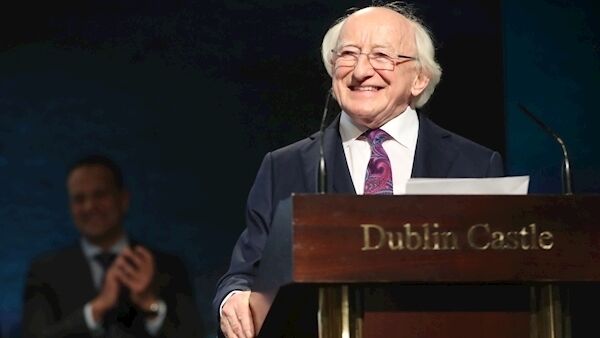
While he would not comment on individual candidates, Mr Higgins said the other candidates’ queries about his expenses “shouldn’t be used as a substitute for the absence of a platform”.
The President was also roundly criticised by the other candidates for not participating in all of the presidential debates.
In the final days of the campaign, he came under attack for his use of the Government’s jet to fly to Belfast in May. He claimed he flew rather than travelling by road due to security and logistics reasons but later said it was because he was following the advice of his office.
Taoiseach Leo Varadkar congratulated Mr Higgins on his re-election victory over the weekend, saying he was “really happy” that the political veteran would continue to be the country’s president for the next seven years.
Mr Higgins’ plans for a second term including setting up a year-long initiative around achieving equality.
He also wants to launch an arts initiative called Imagination and the Nation, which aims to highlight the necessity of art and creativity in contemporary Irish life.
Mr Higgins has long championed an ethical Republic and has repeatedly addressed issues surrounding memory, commemoration, identity, and the conflicting traditions on the island.
The refugee crisis in Europe and the plight of migrants has been a favourite topic, as well as the importance of the arts and Ireland’s great literary tradition.
CONNECT WITH US TODAY



Be the first to know the latest news and updates