Council backs East Cork greenway
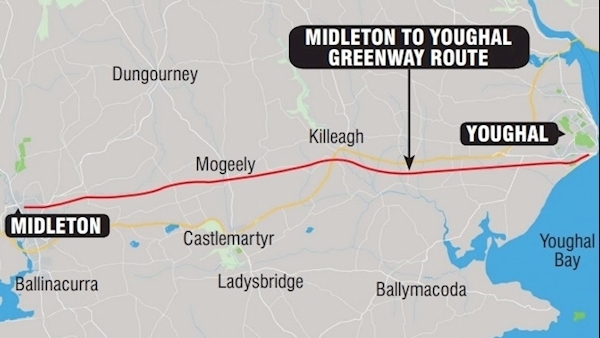
Developing a 23km greenway along a disused East Cork railway line will boost the local economy and is better than letting it lie idle, Cork County Council insists.
It sets out its position on the proposed Midleton to Youghal greenway in planning documents published yesterday as part of its Part 8 planning application process.
The Green Party has branded the proposal as “short-sighted”, claiming it will close the railway line forever.
Laying tarmac over the railway tracks for a greenway will leave little or no realistic chance of the rail line ever re-opening, party representative in the area, Liam Quaide, said.
“We believe it is short-sighted to sacrifice the Youghal-Midleton railway line to bring the greenway about,” he said.
“Commuting times on the N25 are getting longer and longer. This is only going to get worse as our population grows. A train service from Youghal should link up with a light rail system in Cork City as part of an integrated transport network.”
But the council documents say the status of the railway is “disused” and there are no proposals to bring the line into use for rail.
“The railway corridor therefore presents an opportunity to harness an existing and unused asset for the benefit of the local area,” says the council.
The reports also say ownership of the railway property on the earmarked route is vested in Córas Iompair Éireann and that permission to develop, maintain, and manage the proposed greenway by the council will be subject to a licence from CIÉ.
“The ownership status of the property will therefore remain unchanged and this arrangement will provide for the protection of the railway corridor for future rail use and facilitate community and economic gain in the interim.”
The railway between Midleton and Youghal opened in 1860 with regular passenger services operating until 1963. The line remained open for goods traffic until the early 1980s, with all rail traffic ceasing in 1988.

While the railway corridor is largely overgrown, the physical integrity of the route remains evident, with many of the original railway features including sections of track, bridges, culverts, station buildings, embankments, and cuttings still in place.
Some landowners responded to council invitations for one-to-one meetings. Those meetings were “informal and unrecorded” but similar issues were raised by the landowners including the potential impact of a greenway on day-to-day farm operations, the potential increased risk of burglaries and anti-social behaviour, and impacts on privacy.
The council said it plans to appoint a project liaison officer and an agronomist to engage with landowners as the project advances.
The greenway is dependent on funding and if Part 8 planning is granted, the council said it will seek monies from all relevant potential funding sources. The Government announced a €53m three-year national greenway fund in June.
The closing date for submissions on this planning application is October 30.