Institutional misogyny: Dr Scally says culture of paternalism left 221 women in dark on smears
A stark culture of misogyny and paternalism left 221 women in the dark on their smear test audits, Dr Gabriel Scally has found.
Dr Scally has uncovered a widespread disregard for patients which was “damaging, hurtful, and offensive”, with “no compelling requirement” on doctors to provide information to women.
The 170-page document reveals a “total systems failure” with no one person in charge of the cervical screening service.
Health Minister Simon Harris has given Dr Scally additional time to examine the revelation that a US lab outsourced smear sample testing to four other facilities without informing CervicalCheck.
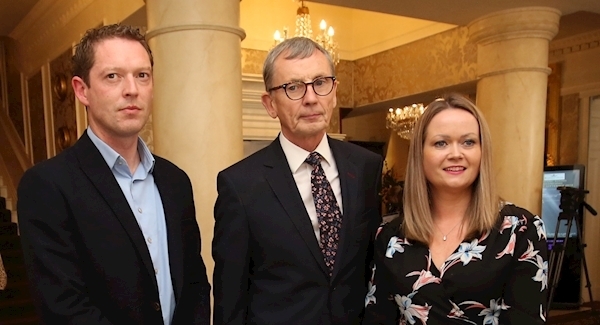
Victims Vicky Phelan, Stephen Teap, and Lorraine Walsh, have called for the complete implementation of all 50 recommendations contained in the Scally review, which they said also raises more questions about how their own cases were handled.
Among the key recommendations in the report are:
The “urgent” revision of the HSE’s disclosure policy to reflect “primary right of patients to have full knowledge of their healthcare”;
A requirement that medical staff, as a condition of employment, complete training in open disclosure;
That the health minister gives consideration to how women’s issues can be given “more consistent, expert, and committed attention” within the health system;
The appointment of two patient advocates to the new board of the HSE;
A single agreed terminology for reporting of results, and specific criteria for defining the different grades of abnormality;
A statutory duty of candor on individual healthcare professionals and the groups where they work.
Nearly 13,000 documents were viewed, all of the key people in CervicalCheck interviewed, and all of the labs used both here and in the US were visited as part of the inquiry.
After publishing his report, Dr Scally called on the treating doctors who failed to disclose smear check audits to personally apologise to each woman as a letter from the HSE is nowhere near adequate.
He recounted the experience of the family of a deceased woman who were recently told of the smear test audit.
They said they went into their disclosure meeting and the consultant said several times about the late woman’s smoking habit and also told them that ‘nuns don’t get cervical cancer’. Now if that isn’t paternalism, what is? It’s verging on misogyny.
Dr Scally added: “This whole episode of poorly handled open disclosure created enormous psychological difficulties and, in some cases, mental illness amongst women.”
Mr Teap, whose wife Irene died last year, said: “Going through this inquiry, it is horrific for us to read, particularly for myself when I see exactly how the ending of Irene’s life now can be summed up in this.
“She did everything right. She got her smear test done. She put her 100% trust and faith in the system. She worked for the HSE for 15 years, everything, everything let her down.”
He vowed to ensure that the recommendations are now implemented so that no other family goes through a similar situation to the 221 impacted by this scandal.
Taoiseach Leo Varadkar said “all of the pain” endured by those impacted by the scandal should now lead to a new “culture in our health service of open disclosure, of grace, of candour, and compassion”.
Mr Harris said: “Extra harm, extra pain, extra suffering was added to women who already had cervical cancer and, in many cases, a devastating diagnosis” through the non-disclosures of smear test audits.
Cabinet approved all of the recommendations in the report yesterday — Mr Harris will return to Government in December with a full implementation plan.
Opposition parties insisted the families of women who have died or been damaged by the scandal should make the ultimate decision on whether a commission of investigation is still needed.
Fianna Fáil leader Micheal Martin said there is a clear need to “talk to the families and the victims”. Labour health spokesman Alan Kelly agreed that affected women need to advise on holding a full-scale commission of investigation.
The comments came as it emerged Mr Varadkar is considering setting up a “leak inquiry” to uncover which high-level official told media the Scally report had advised against a commission of investigation before victims were informed.
What Scally said
The current policy and practice in relation to open disclosure is deeply contradictory and unsatisfactory. In essence, there is no compelling requirement on clinicians to disclose.
It wasn’t just the nondisclosure, but the rushed nature of the disclosure that did take place after the publicity surrounding Vicky Phelan’s court case that affected them [the women] adversely.
There are serious gaps in the governance structures of the screening services.
In the specific case of CervicalCheck, there was a demonstrable deficit of clear governance and reporting lines between it, the National Screening Service, and the higher management structures of the HSE.
This confusion complicated the reporting of issues and multiplied the risks.
I am satisfied with the quality management processes in the current laboratory sites. All of the laboratories visited by the Scoping Inquiry team are meeting the regulatory requirements current in their own country.
Some women mentioned that their relationship had broken down as a result of the treatment process. It has also left some women and families in financial difficulty.
There can be no good reason for the delays in giving women access to their clinical notes. It should not be necessary for women to feel that they have to engage solicitors in order to be provided with a full copy of their medical records.
The point was made that many of the major controversies about maltreatment of patients or denial of reproductive rights in the Irish healthcare system have involved women being damaged.
The time has surely come where public health physicians are accorded the same recognition as clinical colleagues and their skills deployed at the core of all public health programmes.
The comments of some of the women affected by the cervical cancer scandal and interviewed by Dr Scally
Why does it always happen to women?
Women and women’s rights are not taken seriously.
He said he didn’t know the protocol.
He said it had got lost in the file.
He said it was caveated not to disclose.
He basically lied to me.
He had seen I had had a hysterectomy and decided I didn’t need to know.
To think I have gone to him over the years and he has said nothing.
Tell us the truth.
So am I just a number?
CONNECT WITH US TODAY



Be the first to know the latest news and updates