Court overturns €40,000 damages award to 'remarkable' SNA who was told she could not return to work after crash
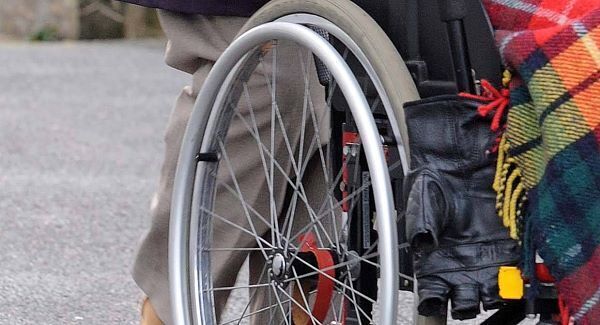
The Court of Appeal has overturned a €40,000 damages award made to a special needs assistant who was told she could not return to work arising from serious injuries suffered by her in a road accident.

Court overturns €40,000 damages award to 'remarkable' SNA who was told she could not return to work after crash

By Ann O'Loughlin

The Court of Appeal has overturned a €40,000 damages award made to a special needs assistant who was told she could not return to work at a special needs school arising from serious injuries suffered by her in a road accident.

The case of Marie Daly raised important legal issues concerning the obligations of employers towards disabled employees.

Ms Daly had been employed from 1998 as a SNA by the Nano Nagle School, Listowel, Co Kerry, which provides services for 77 children with physical, intellectual and behavioural challenges.

In 2010 she suffered serious injuries in a road accident, leaving her confined to a wheelchair as a result of paraplegia, COA president Mr Justice Sean Ryan said. A well respected and admired SNA and a remarkable person, she was anxious to return to work and asked the school in 2011 to permit her do so.

The school had her assessed by an occupational physician and occupational therapist. It was concluded, of 16 identified duties of a SNA, she was unable to perform seven. While the therapist recommended Ms Daly could act as "a floating SNA", there was no such position then at the school, it could not get funding for that, and the occupational physician later advised she was unfit to return to work and the school so informed her.

After the Equality Tribunal dismissed her complaint, she appealed to the Labour Court which found in her favour and awarded €40,000 compensation.

The Labour Court decision concerned proper construction of Section 16 of the Employment Equality Act 1998, enacted to give effect to the 2000 EC Directive on equal tratment in employment and occupation.

It provides an individual does not have to be recruited, promoted or retained in a position if that person will not, or is not capable of undertaking, the duties attached to that position. It also provides for employers to take appropriate measures to enable a person with a disability to have access to employment unless the measures would impose a "disproportionate burden" on the employer.

The Labour Court held the school construed its duty under Section 16 too narrowly and had a duty to fully consider the vaiablity of a reorganisation of work and a redistribution of tasks among all the SNAs so as to relieve Ms Daly of those duties she was unable to perform. After the High Court upheld the Labour Court decision, the school appealed.

The three-judge Court of Appeal, in separate concurring judgments of Mr Justice Ryan and Ms Justice Mary Finlay Geoghegan, with which Mr Justcie George Birmingham agreed, ruled the Labour Court's construction of Section 16 was not correct.

Mr Justice Ryan said the "central reality" is Ms Daly is unable to perform the essential tasks of a SNA in this school "and no accommodations put in place by the employer can change that, unfortunately". The Labour Court had not correctly applied the law to the undisputed facts.

The school's case, he said, was the SNAs had to work in pairs because of the sort of pupils it catered for and the only option for Ms Daly to stay in employment was to get funding for a floating SNA as well as the staff complement funded at the time. The school made enquiries about that but was told SNAs were provided for the benefit of pupils, not staff, and a floating SNA could not be sanctioned.

The Labour Court erred in dismissing the school's arguments that the floating SNA position required creating an entirely new position, he said. "That was just what it involved."

The school management had to decide in the interests of the whole school community but primarily the children whose care was entrusted to the school. Safety was a major concern and the school could not take chances with care and safety obligatioons.

The Labour Court erred in focussing on the position of Ms Daly to the exclusion of the other legitimate interests the school had to accommodate. If no reasonable adjustments can be made for a disabled employee, the employer is not liable for failing to consider the matter or for not consulting with the employee, he said. It was not about review of process but "practical compliance".

Ms Justice Finlay Geoghegan said Section 16 did not require an employer to retain an individual who could not perform the essential functions of a position. It was not dispted Ms Daly could not perform seven main duties of a SNA and it was never contended a redistibution of the tasks under those seven duties would render her capable of undertaking them.

More in this section

Lunchtime News

Newsletter

Get a lunch briefing straight to your inbox at noon daily. Also be the first to know with our occasional Breaking News emails.

Cookie Policy Privacy Policy Brand Safety FAQ Help Contact Us Terms and Conditions

© Examiner Echo Group Limited