Farming greatest polluter of waterways says Environment Protection Agency
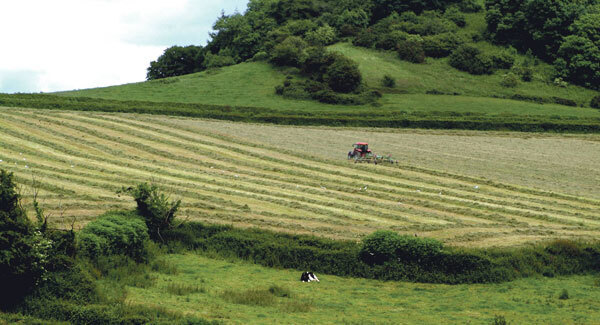
Farming is being singled out as the greatest polluter of our waterways.
The Environment Protection Agency examined our waterways to find there has been a failure to prevent the deterioration of water at hundreds of water bodies around the country.
Ireland is at risk of fines from the EU, due to our failure to improve our waters.
EPA spokesman, Andy Fanning, has said too much fertilizer is making its way into rivers and streams.
"Farming is the big issue, the real cause of this pollution is too much nutrient getting into the waterway," he said.
"The run off from fields is a particular issue and also farm yards are sources of this nutrient."
Inland Fisheries Ireland has expressed its disappointment at the findings, but has cautioned against singling out any particular sector.
Dr Ciaran Byrne, CEO of Inland Fisheries Ireland, said: "From an ecological and angling-tourism perspective, our rivers and lakes are vital national resources.
"It is essential that we protect and conserve these assets and water quality has a significant impact on fisheries habitats and populations."
The agency has backed the EPA’s findings that "multiple factors" are at play for the standard in water quality.
According to the EPA report, the total number of reported fish kills in 2013-2015 was 97, an increase in fish kills compared to 2007-2009 and 2010-2012.
In several instances, the exact cause was unknown and several factors may have played a part, according to the agency.
Dr Byrne said: "There were 31 separate fish kills across the country last year, but just eight of those were directly attributable to agricultural activities.
"Inland Fisheries Ireland is grateful to the farming community for their continued consideration and vigilance. Good farmyard management can help to prevent accidental runs of polluting substances and protect the local environment."
The body said that two fish kills were as a result of municipal works, one by industrial works and four instances were difficult to ascertain the exact cause. They added that 16 incidents were as a result of disease and natural causes.