Government 'took safe decision' by bailing out banks
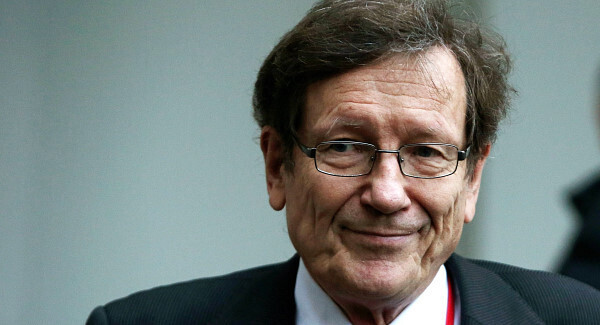
The first expert witness at the Banking Inquiry has said the Government took the “safe decision” to bail out Ireland’s banks.
Peter Nyberg, a former IMF economist and Finnish government banking official was questioned by a group of 11 legislators on his 2011 government-commissioned report into the crisis.
“When decision-makers are faced with that situation, what one tends to do is take the safe decision even though afterwards it might not seem so wise, and that is what I think the Government did,” he said.
He said he understood but did not necessarily condone the move.
“It is a culmination of a lot of mistakes that were made before but the mistakes were not made on that night, the mistakes were made several years before and not only by the Government but really by everyone else.”
He said that several reports have already been written on Ireland's collapse, which had many things in common with those elsewhere.
“My view then, and my view now, is that the causes of the crisis – it’s unlikely, I think possible, that something really exciting and new will emerge.”
Mr Nyberg said the Irish property bubble was not a unique phenomenon and could be compared to developments in Spain and Scandinavia. Despite this, it was “home grown''.
He said the blame for the handling of the crisis was more widespread than just the Government, which had to assure the markets that the banks were solid enough to lend to.
Mr Nyberg added there was an underlying assumption before the collapse that the financial institutions were stable and efficient.
“That is something which I would classify as ’group think’ – thinking as your peers do in order to not stick your head up too far – and it would explain to quite some extent the fact that everyone was unprepared for the crisis when it came and everyone was willing to accept the case of risky behaviour on the part of the banks and passivity on the part of the public sector.”
He said there were doubters.
“People are smart but it is very difficult. People doubted in the beginning but once your doubts have proven unfounded year after year you might change your mind.”
He pointed out that a lot of people were enjoying “concrete” benefits during the bubble – the Government was reinvesting boosted tax takes in higher public sector wages, better social security and “onerous” costs for public sector services.
“A lot of people had concrete joy from the bubble as long as it lasted. Once the bubble burst these advantages were no longer available.”
He said hundreds of individual decisions had to be examined, by people who felt they did not do anything wrong but which made the crisis possible.
Mr Nyberg said borrowers had to decide whether they could meet repayments.
He pointed to lack of implementation of existing regulation: “It does indicate that the existence of supervision and regulation is not enough to hinder systemic crises.”
Speaking at the European Parliament in Strasbourg, Fine Gael MEP Deirdre Clune criticised the official refusal of the European Central Bank (ECB) to attend the Banking Inquiry.
Ms Clune is encouraging her fellow MEPs to press the ECB to participate in the Oireachtas inquiry and to explain their role in decisions taken that impacted on the Irish economy.
“This is an important inquiry for the Irish people,” she said. “We went through an awful lot.”
She added: “Decisions they took impacted on the Irish people, and I think they should come before it and explain their position, in the interests of openness, transparency and probably, as well, in the interests of democracy.”