Omagh families threaten legal action
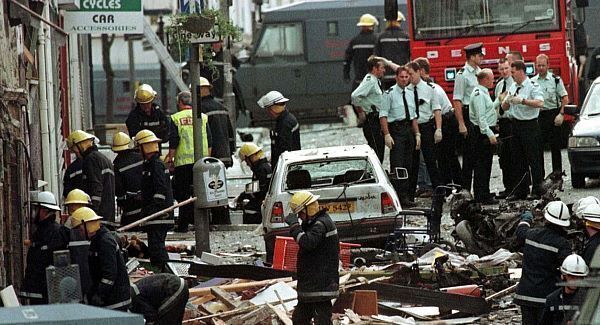
Families of Omagh bomb victims have vowed to take the Irish and British governments to court if they continue to refuse to hold a public inquiry into the attack.
Relatives issued the warning to the authorities in London and Dublin as they outlined details of a report they commissioned into alleged intelligence failings on both sides of the border in the lead up to the 1998 Real IRA atrocity and with the subsequent criminal investigations.
The families handed the report to the governments last June, but say they have yet to receive a substantive response.
The families were particularly critical of the stance taken by Taoiseach Enda Kenny and Justice Minister Alan Shatter to their campaign.
A spokeswoman for the Department of Justice in Dublin said Mr Shatter is still considering the report, presented to him by the group in July 2012.
“The minister is very sensitive to the continuing pain and grief felt by those who were injured and the families of those who were so callously murdered by the Real IRA in the Omagh atrocity,” she said.
“The minister is currently in the process of finalising his consideration of the issues that have been raised by the group.
“He hopes to be in a position to conclude this process soon and once a conclusion has been reached he will communicate directly with the Omagh group.”
Michael Gallagher, whose son Aidan died in the bombing, said the lack of answers from the governments was “prolonging the agony of the families”.
“I think the governments should come clean and say we are going to have a public inquiry or we are not going to have a public inquiry,” he said.
“If they come out and say they are not going to have a public inquiry then we will go to court and challenge that decision and we will put our evidence before the court and let the court decide if there is merit in our case or not.”
Any future court action would come in the form of judicial review proceedings.
Twenty-nine people, including a woman pregnant with twins, died when the dissident republican car bomb ripped through the Co Tyrone town, just months after the signing of the historic Good Friday Agreement peace accord in the North.
While no one has been criminally convicted of the crime, four republicans have been found liable for the atrocity in a landmark civil case taken by some of the bereaved relatives and ordered to pay €1.85m compensation.
Relatives today only published a small part of the report collated for them by London-based security experts, insisting the remainder was too sensitive for public consumption.
One of the most significant sections, the families claims, are files of 4,000 emails detailing communication between an FBI agent, who had infiltrated the Real IRA at the time of the bombing, and his handlers.
While emails from agent David Rupert, who was apparently working in conjunction with MI5, have already featured heavily in past court proceedings, the families claim that a number which indicated that a bombing was planned have never been made public.
Relatives contend that the messages identify Omagh as a potential target and establish a time frame consistent with the eventual attack.
Mr Gallagher said the information was not acted on or shared with Royal Ulster Constabulary (RUC) police officers working in the Omagh area at the time.
“We’ve demonstrated today that the government agent had information and passed that information on which certainly could, in our opinion, have prevented the Omagh bomb or at best could have helped catch those afterwards,” he said.
“There are particular names of individuals, locations, there is really good detail.”
The families claim the report also contains evidence that an active intelligence operation was ongoing on the day of the attack.
While it has previously emerged that intelligence operators were monitoring mobile phone communications on the day, an official probe found that this surveillance was not in real time, and therefore could not have been used to prevent the bombing.
But Mr Gallagher said: “We feel there was an enormous amount of intelligence available, that intelligence was not used properly and as a result of this we have had no convictions.
“It’s very damning and it’s a blot on both governments. For that reason we are calling on both governments to come together and tell the truth, tell what happened on that day.”
Noting the length and cost of the public inquiry into the Bloody Sunday killings by British Army soldiers in Derry in 1972, British Prime Minister David Cameron has previously voiced resistance to holding further such probes in the North.
The relatives, who are part of the Omagh Support and Self Help Group, said the US government must also have a role in any future public inquiry as its organisation handled agent Rupert.
They said they would ideally like an answer from the authorities before the 15th anniversary of the bombing on August 15.
Not all the victims’ families are proactively involved in the campaign for an inquiry.
Former Northern Ireland police ombudsman Dame Nuala O’Loan, who while in office carried out her own investigation into the bombing, and former Metropolitan Police assistant commissioner and counter terrorism chief Bob Quick today publicly backed the call for an inquiry.
Amnesty International has also added its voice to demands for a full independent probe.
Dame Nuala, attending the public launch of the report in Omagh, said what had emerged in the 15 years since the attack was “cause for enormous concern”.
“There can be no doubt that there were massive failures by the security and intelligence services,” she said.
She said the report contained very significant material that had to be acted on with a public inquiry.
“It (an inquiry) will provide answers for the families but above all it will inform the fight against terrorism in the future,” she said.
Mr Quick said he had given support to the relatives for years in the background.
“More recently I have learned even more new information which certainly as a former counter terrorism professional has led me to conclude that the only proper thing to do is examine these issues,” he said.
“They are complex, they are sensitive, they are very difficult to confront and handle but nevertheless I am firmly of the view that what’s emerged so far is more than enough grounds to conclude that a proper and full ranging inquiry is the thing to do.”
Mr Gallagher acknowledged that the killers may never be brought to justice.
“Justice is difficult,” he said.
“We would obviously like justice but possibly the best we may get is the truth and we are just going to have to live with that.
“We don’t want to keep on wondering what happened, or what didn’t happen, or what could have happened, we need an end to all of that.”
Responding to the families’ call, a spokeswoman for the Northern Ireland Office said: “We are currently considering the Report from the Omagh Support and Self Help Group and hope to make a decision soon.”

CONNECT WITH US TODAY



Be the first to know the latest news and updates