Irish engineer 'murdered for wages' in Mozambique
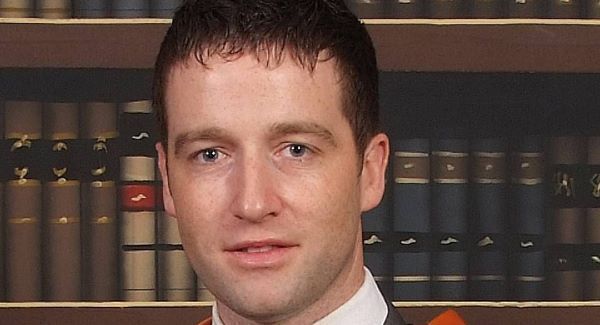
An Irish engineer robbed and murdered while working in Mozambique was killed for the cash he was carrying to pay local workers, detectives believe.
Quantity surveyor William Deasy was beaten to death four weeks ago today after he left work at a mine on the north-east coast of the east African country.
The 32-year-old’s body was discovered two days later near to where he lived, with his car found abandoned 124 miles (200km) away.
Investigators believe his killers knew he often carried big sums of cash to pay other workers at Kentz engineering, according to sources.
Police chiefs and government officials in Mozambique vowed to carry out a full and thorough investigation into the vicious attack during a meeting with Junior Minister Joe Costello.
“There is a family deeply bereaved, they had lost a loved one, a son, who was an extremely bright, capable young man and they lost a son at this distance,” said Mr Costello, who is in Mozambique.
“If any closure was to take place, there has to be a full and thorough investigation.
“Being here at this point and time it was appropriate to raise it at the highest level and I will be speaking to the family when I return.”
Mr Deasy, from Dublin Pike, north of Cork city, joined Kentz after he qualified from Cork Institute of Technology in 2011. He was working on a project at Kenmare’s Moma mine.
Mr Costello held talks with senior police and the country’s Minister for Foreign Affairs Oldemiro Baloi at the request of the Deasy family.
The Irish minister was in the country to see the work of some Irish Aid funded projects.
Mr Deasy’s distraught parents, Pat and Abina, and four siblings have described him as a bright, intelligent, ambitious man who dedicated himself to his new job and planned to return to college.
A preliminary file being prepared for the public prosecutor’s office will be seen shortly by the family.
“I met various authorities to discuss the case and to get them to give commitments that there would be a full and thorough investigation and that no stone will be left unturned,” said Mr Costello.
Mr Costello said authorities insist the attack was out of character for the country which found peace 20 years ago after a bitter civil war.
“Mozambique is certainly a very safe county for Irish people to come to,” he said.
“Irish Aid has been here for many years and Irish companies and people are coming in greater numbers to live and work and they do so in a safe environment.”
Some shocked expatriates working in the tourist industry had not heard of Mr Deasy’s violent murder last month and stressed that Mozambique is among the safest places in Africa.
Jon Wright, 40, from Kinsale in Cork, who runs a diving and sea research centre with his partner, Yara Tibirica, said the 1,553-mile (2,500km) stretch of coastline along the Indian Ocean is idyllic.
“Mozambique is one of the most beautiful places in the world,” said Mr Wright, who lives in Zavora, near Inharrime.
“It’s so safe. I lived all my life in Cork and I’ve heard of several cases of people being beaten to death at home.”
His partner added: “We live in an isolated place and leave our keys in the car and our doors unlocked.”
Hotel manager Bruce Chapman said that, while the country is more expensive than other countries to travel to, its coastline is unspoilt and pristine compared with other long-haul destinations.
“It’s an exception rather than the rule,” added Mr Chapman, from north Hampshire in England, who runs the Southern Sun in Maputo.
“You get some car hijackings and stuff like that, but it’s usually just minor things, never anything major like that.”

CONNECT WITH US TODAY



Be the first to know the latest news and updates