Man launches appeal to double murder conviction
A Dublin man who was found guilty of the double murder of two Polish mechanics has begun an attempt to have his conviction overturned at the Court of Criminal Appeal.
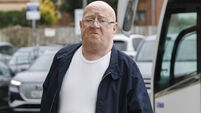
David Curran (aged 20) was jailed for life by Mr Justice Liam McKechnie in May last year, after a Central Criminal Court jury found him guilty of murdering Pawel Kalite (aged 29) and Marius Szwajkos (aged 27) by stabbing them through the head with a screwdriver.
Curran, of Lissadel Green, Drimnagh, Dublin, had pleaded not guilty to murdering the men outside their home on Benbulben Road, Drimnagh on February 23, 2008, but admitted manslaughter on the grounds of provocation.
His co-accused Sean Keogh (aged 22), of Vincent Street West, Inchicore was found not guilty of the double murder, having been charged with the crime on the grounds of joint enterprise. He was jailed for four years however, after pleading guilty to assault causing harm to Pawel Kalite.
Surmising a number of written submissions before the court, counsel for the applicant, Mr Giollaiosa O Lideadha SC, argued that parts of the trial judge’s charge to the jury were “seriously defective” and that the judge failed to direct the jury adequately or consistently on the “ultimate issue” of provocation.
At the original trial, the jury heard evidence that David Curran had stabbed the two men having “lost control” and succumbing to a “mad rage” when the two victims shouted at him and moved toward him from the door of their house.
Mr O’Lideadha contended that, when asked by the jury as to whether it was for the prosecution or the defence to prove such events took place, Mr Justice McKechnie gave a “wholly wrong” answer and explicitly proposed there was an onus of proof on the defence to satisfy the jury that the two victims had shouted and moved toward Curran.
He submitted the jury should have been told that if there was any evidence of shouting or movement having taken place, then the onus was on the prosecution to disprove these occurrences, and if they failed in this, the jury must treat the shouting or movement as a fact.
Mr O Lideadha said that Mr Justice McKechnie gave an “unbalanced” charge in which he not only refused to put the defence case to the jury, but failed to give a fair summary of the facts or give appropriate legal direction on how the facts should be treated.
Curran claimed he was “out of his head” on drink and drugs and lost control when he stabbed the two men, believing his father had been stabbed in an earlier row with Mr Kalite. However, the State rejected this contention and argued that Curran had concocted the story about his father being stabbed.
Mr O Lideadha argued that defence was “grossly prejudiced” by a comment made by the prosecution inviting the jury to draw an adverse inference from a decision by the defence not to call one particular witness to give evidence. Curran claimed this witness had contacted him to tell him his father had been stabbed.
Mr Kalite and Mr Szwajkos never regained consciousness and died in hospital within days of the brutal stabbing.
The State Pathologist, Professor Marie Cassidy, concluded that Mr Kalite sustained two stab wounds to his left temple, one which penetrated his skull and did irreparable damage to his brain. He also had broken teeth.
Dr Marie Cassidy said Mr Swajkos was stabbed through the left temple, skull and brain. He also had a fracture to the right side of his skull, consistent with falling to the ground after being stabbed.
The appeal hearing, which is expected to last three days, continues tomorrow in front of presiding judge Mr Justice Donal O’Donnell.