Cowen: I'm not to blame for meltdown
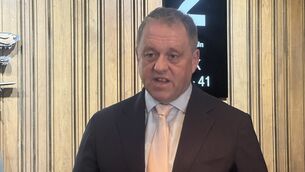
Taoiseach Brian Cowen tonight insisted he was not the bogeyman personally to blame for the meltdown in the State’s economy.
With an International Monetary Fund (IMF) and European bailout of up to €70bn now on the table, Mr Cowen said the unprecedented rescue package will address serious and urgent issues, including the debt-riddled banks.
But when pressed on whether he was culpable for the economic mess the country is stuck in, Mr Cowen said he stood by his decisions in office.
“I will defend my position throughout my political career,” the Taoiseach said.
“I don‘t accept your contention that I am the bogeyman that you are looking for.”
Mr Cowen called for the solidarity Europe has shown Ireland to also be shown in Ireland.
Under the bailout scheme, income tax will increase but the country‘s controversially low 12.5% corporation tax, which the Government dubbed a red-line deal-breaker if forced into negotiations, will not be touched.
Finance Minister Brian Lenihan, who flanked the Taoiseach to announce the IMF/EU application, said the mammoth cash fund would be firepower for the banks and the wider economy.
He refused to offer a breakdown of the size and scale of the rescue package being sought and also claimed that there was no guarantee that the money would be drawn-down.
Ireland’s State running costs are €19bn in the red.
But the deepening crisis has been in the banks with about €23bn of deposits shifted out of Ireland this year and prohibitive borrowing rates on the international markets.
An asset sell-off in the banks may also be looked at under the terms of the deal, Mr Lenihan added.
Governor of Ireland‘s Central Bank Professor Patrick Honohan, who dramatically broke ranks last week to reveal the State was staring at a bailout of tens of billions, said loans will put economic and financial policy on a more secure path.
“We can be reassured that the Irish banking system retains the support, not only of the Central Bank of Ireland, but of the European Institutions,” Prof Honohan said.
No estimates were given on how much debt the loans will burden the country with.
The decision to go to the IMF and Europe was taken after an emergency Cabinet meeting in Government Buildings, Dublin followed by a teleconference call to other European finance ministries, the Eurogroup.
Ministers from the G7 group of nations have also discussed the plan and are expected to endorse it.
Formal negotiations on the exact make-up of the bailout and how it will be delivered will take place over the next few weeks.
Standard IMF bailouts cover a three year period but Mr Lenihan said that is flexible and he would not put a timeframe on when Ireland would return to the money markets.
In the meantime, the Government will push ahead with the publication of its four Budget roadmap to recovery early this week with headline figures on €15bn savings to be unveiled.
Department of Finance number-crunchers are also analysing the finer detail of Budget 2011, due on December 7.
Mr Lenihan said the €8.65 minimum wage, the second highest in Europe, will have to be looked at. Social welfare cuts and new taxes are also on the cards.
Mr Cowen is facing fierce criticism over his tenure as Finance Minister in the lead up to the housing crash and international banking crisis and over the scale of tax breaks for developers and property investors.
But he rejected suggestions his time as Taoiseach should end: “In relation to my own position I have made it very clear that at this time this Government is determined to fulfil it‘s duty and won‘t be deflected from this duty.”
The Government has faced damning criticism, calls for resignations and warnings of distrust among the public over the last week after initially insisting there were no talks with the IMF before conceding a loan might be needed and ultimately asking for one.
Mr Lenihan added: “I’m sorry if people believe that they were misled in any way. I certainly did not mislead them in any respect. And I know that no member of the Government intended to mislead them.”
On top of that a by-election in the once staunch heartland of the ruling Fianna Fail party takes place on Thursday.
The Government is already operating a razor thin majority and with victory in Donegal South-West unlikely the Fianna Fáil-Green coalition could be left with a margin of just two seats to retain power.
CONNECT WITH US TODAY



Be the first to know the latest news and updates