Foot and Mouth exclusion zone crosses border
A livestock importer and dealer were being questioned today as sheep were destroyed amid heightening fears that foot and mouth disease could have spread to Northern Ireland.
The flock was incinerated on a farm at Meigh, South Armagh, which straddles the Irish border and which has now been sealed off.

The alarm was raised after Department of Agriculture officials questioned the two men.
They are trying to trace the movements of approximately 291 sheep, which had been bought at a market in Carlisle - before the disease in Britain was confirmed - and then transferred to Northern Ireland certified for slaughter.
They believe the animals were kept in south Armagh but a majority were later moved across the border into the Irish Republic.
Officials are now investigating if they were in breach of animal movement regulations.
Northern Ireland agriculture minister Brid Rodgers confirmed her officials were trying to identify the ultimate destination of the sheep and in the meantime had placed a restriction zone around the farm, and across the border into north Co Louth.
Tests are being carried out to establish if the sheep had foot and mouth - which would be the first case in Northern Ireland.
But just as worrying is the possibility that the disease may have spread into the Irish Republic.
Mrs Rodgers said that since the zone around the farm straddles the border, authorities in the Republic had been advised and were taken appropriate action.
The minister, who met senior officials and representatives of the agriculture industry in Belfast, said: ‘‘This vividly illustrates the consequences of people ignoring the rules which are in place to protect the livelihoods of farmers and the well-being of our agri-food industry.’’
An RUC spokesman said they had not been asked at this stage to become involved in the investigation.
Tom Parlon, president of the Irish Farmers’ Union, said this latest development ‘‘heightened’’ the challenge faced by farmers in the Republic.
‘‘It is a body blow to the north of Ireland and to the whole island of Ireland, because we did put on a lot of our defences on the fact that we had our island status.
‘‘We just have to redouble our efforts now.’’
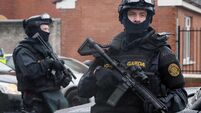
He said he was ‘‘impressed by the ring of steel’’ in place at 30 border checkpoints where police and soldiers are enforcing a ban on all livestock, meat and dairy products imported from the United Kingdom.
A raft of regulations, costing the Irish government IR£1m a week, are in place in a bid to avert the first case in the Republic since 1941.
In addition, Mr Parlon called for a complete ban on all movement of livestock within the state, except for animals going directly from farm to slaughter, on top of an existing ban on livestock markets.