Lottery breached problem-player protections
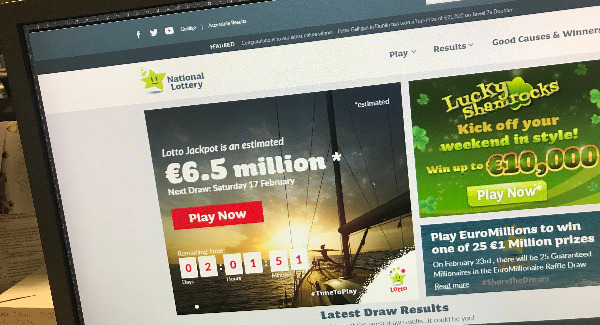
The Regulator of the National Lottery (RNL) annual report for 2016 shows that it appointed an investigator to look at apparent breaches by Premier Lotteries Ireland of the self-exclusion provisions which can lock out a player from their account for a set period of time and ensures they do not receive marketing messages in the same timeframe.
The report states that in April last year the RNL issued a direction to Premier Lotteries Ireland “specifying that the Operator had breached terms and conditions of the Licence as identified by the investigation”.

The RNL then directed that the operator of the lottery comply with two paragraphs of Schedule 9 to the Licence.
In one a player can choose an option that would mean their account is closed for a minimum of six months and the balance in their online wallet returned, while they receive no marketing messages for the period of their exclusion.
In a second, minimum one-month “take a break” option, a player choosing that option has their account suspended for a minimum of one month, with the balance in their online wallet held for the player, who does not get marketing messages for the period of their exclusion.
In the report, the Regulator said it is continuing to monitor the situation but emphasised that “to date, no further enforcement action has resulted arising out of the investigation”.
The RNL told the : “Some players who had self-excluded for certain periods were able to play prior to the expiration of their self-exclusion period.
"Also, some players who had self-excluded for certain periods received marketing messages prior to the expiration of their self-exclusion period.
“The breaches were identified as at 17 October 2016 when the investigator was appointed, and related to 11% of players who self-excluded.
"Overall, 19 players out of a total of 172 players who self-excluded during a 22-month period were able to play before the self-exclusion period expired.”
It added that it was not a widespread consistent pattern of non-compliance.
The annual report also showed the operator submitted 34 requests for approval or consent to the RNL, including 16 in respect of Interactive Instant Win Games.
Of those, three were turned down, primarily for reasons of player protection.
One was in relation to a proposed scheme for ‘Super Rich’, with the RNL responding that “the reputation of the National Lottery could be impacted negatively”; while in another, regarding interactive game ‘Snakes and Ladders Egypt’, the Regulator cited the opinion of an expert in youth gambling and risky behaviour.
The RNL received 53 complaints, including 19 relating to online experiences.