HSE warns of annual critical ‘cost pressures’
Every day in 2018, the HSE will spend €30.2m delivering services. However, it also faces a financial challenge — it has to save €346m during the year.
Funding for the National Service Plan 2018, at €14.5bn, represents an overall increase of €608m, up 4.4% on its allocation last year.
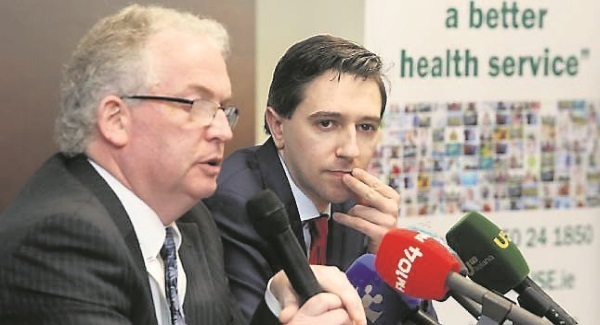
HSE director general Tony O’Brien said it has to continuously strive for operational efficiencies.
“To mitigate the estimated operational, financial challenge for 2018, the HSE has developed a comprehensive Value Improvement Programme that will come into effect from the beginning of 2018,” he said.
It is a single, over-arching programme aimed at improving value within existing services and with non-direct service areas, as well as offering strategic value improvement.
“Robust governance and appropriate support arrangements will be established to manage the programme,” said Mr O’Brien.
He said value will be judged on service improvements and user experience, alongside evidence of economy, efficiency, and effectiveness.
Health Minister Simon Harris said it is important to question whether the State is getting value for money when health budgets are being expanded.
Mr O’Brien said the Value Improvement Programme is “very consistent” with what other publicly funded healthcare systems are doing.
“So it is just a normal part of business, and it is the way health services will be operating in the future,” he said.
Mr O’Brien insisted, however, that the programme had not been developed to reduce the level of care to patients of the total level of activity set out in the service plan.
He said the additional investment had allowed the HSE to make a number of significant investments next year.
Some of the investments include €9m to expand paediatric/adolescent orthopaedic services; €15m to develop mental health services; and €10m for respite care.
An additional €25m investment in primary care will support the GP contract, GP training, diagnostics, therapies, nursing, advanced nurse practitioner appointments, and community nursing.
The HSE will also spend €40.2m on acute hospital services. The money will be used to improve access to critical care services, and there would also be an investment in services for people with spina bifida and other spinal conditions.
Women’s and infant health services will be expanded through increased scanning and gynaecology services.
Cancer services nationally will receive a total of €5.5m, and this would allow for the expansion of services including radiotherapy treatment.
Mr O’Brien said additional frontline staff will be appointed by way of direct replacements, “agency conversion”, and further recruitment.
HSE national director of acute hospitals Liam Woods said additional staff will be needed for new services outlined in the spending plan, and that the overall number would also increase.