Every junior cycle student to take formal oral test in Irish
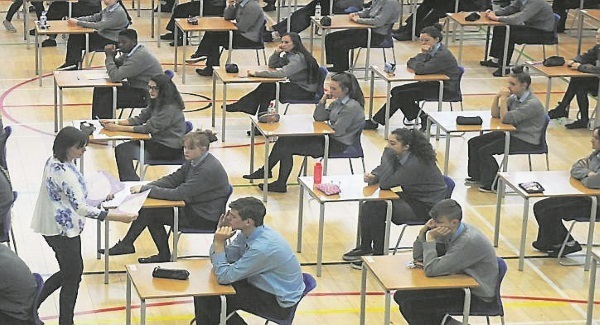
It is one of three subject areas in which a new curriculum is being introduced, following the rollout since 2014 of the revised English course and similar changes for junior cycle science and business studies from last year.
Up to now, oral Irish was optional in the Junior Certificate but most students were not examined as there was teacher union opposition to the test not being assessed centrally by State Examinations Commission (SEC) examiners.
Although numbers being examined in oral Irish jumped significantly as a result of marks increasing from 25% to 40% in 2012, fewer than 40% of Junior Certificate students undertook an oral test last year.
However, under the junior cycle reforms, oral Irish can now be examined in schools by their own teachers as part of the in-school assessment.
The Association of Secondary Teachers Ireland (ASTI) has only signed up to supporting the reforms in a summer ballot, after many years of industrial action and non-co-operation. That campaign was backed until 2016 by the Teachers’ Union of Ireland (TUI).
However, the oral test will no longer be counted towards the Junior Certificate examination, but instead will form part of the classroom-based assessments (CBAs) which are a central part of the reforms of junior cycle.
The outcomes of CBAs in all subjects will be reported by schools to parents at the end of third year, along with their Junior Certificate results, in the new Junior Cycle Profile of Achievement (JCPA).
The first JCPAs will be issued this year. They will combine results in CBAs in English with the Junior Certificate results that will issue to around 62,000 students next week.
Launching the new junior cycle specifications in Irish, modern languages and art yesterday, Education Minister Richard Bruton said the emphasis on oral skills in CBAs is a new approach.
“It’s part of our wider strategy for the Irish language,” he said.
“It’s very much emphasising the oral tradition of the language, trying to get people engaged with languages as something where they should achieve a level of competence, being able to exchange with their colleagues, and really have an appreciation as part of our culture.”
A similar approach will be used in relation to modern languages, with oral tests forming part of the new curriculum and assessment model under the reforms now being introduced in all schools.
The visual art curriculum involves practical work in different media, which can lead to a specific outcome like an artwork, a design, architectural study, an installation or an event.
A key focus is to develop students’ imaginations by working through ideas or concepts and allowing them to exercise personal responsibility for specific tasks.
All 730 second-level schools are also offering a wellbeing programme from this academic year.
Mr Bruton said it includes learning opportunities to enhance the students’ physical, mental, emotional and social wellbeing.
Editorial: 10
CONNECT WITH US TODAY



Be the first to know the latest news and updates