UK may have to accept EU privacy regulations for years
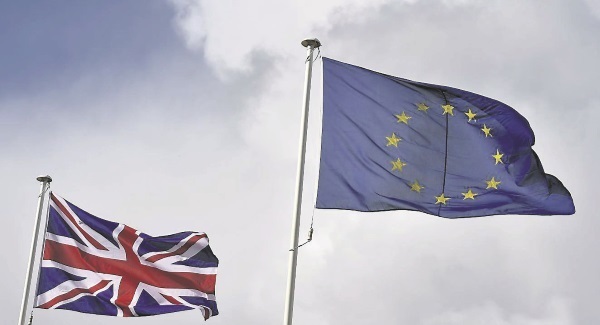
The latest British government paper makes clear that, under current arrangements, the European Commission will have the unilateral power to decide whether the UK’s legislative framework is “adequate” for the flow of the commercially valuable data to continue unchecked following EU withdrawal.
Officials have no doubt that the UK will meet the adequacy test on the date of Brexit, expected in 2019, but that may change if UK legislation on issues like data collection and protection diverges from the EU rulebook in the years to come.
The paper reveals the UK is hoping to persuade Brussels to reach early agreement on an unprecedented new mutual recognition model which would respect the UK’s sovereignty and remove uncertainty over whether it can maintain adequacy status.
The Confederation of British Industry has warned that the UK’s multibillion-pound digital economy is “at risk of isolation” as a result of Brexit unless the government secures a transition agreement avoiding interruptions to the flow of data.
Previous adequacy agreements with non-EU countries have taken 18 months or more to conclude.
The new document, published ahead of the third round of formal Brexit talks in Brussels next week, acknowledges uncertainty over the future data relationship between the UK and the EU “may force businesses on both sides to incur unnecessary expense and time in contingency planning or put them under pressure to renegotiate what may be less favourable contractual arrangements”.
It warns that any disruption in cross-border data flows would be economically costly to the EU and UK, and new restrictions on the exchange of information would “harm both economies”.
The EU data economy is forecast to be worth €640m by 2020 .
Sharing personal data is also essential to the fight against terrorism and serious crime, the British government paper states.
The paper calls for early UK-EU agreement on mutual recognition of data protection frameworks, with an agreed timeline for longer- term arrangements.
And it seeks assurances that flows of data between the UK and non-EU countries with adequacy agreements — such as the US, Canada and New Zealand — can continue on the same basis following Brexit.
It makes clear that current EU directives on data protection will be written into UK law and calls for the UK’s Information Commissioner Office to continue to take full part in discussions with EU counterparts following Brexit.
“Data flows between the UK and EU are crucial for our shared economic prosperity and for wider co-operation, including on law enforcement,” said the document, released by David Davis’s Department for Exiting the EU.
“It is therefore essential that as part of the UK’s future relationship with the EU, we agree arrangements that allow for free flows of data to continue based on mutual trust in each other’s high data protection standards,” he said.