Unions face cross-Dáil scrutiny of pay claims
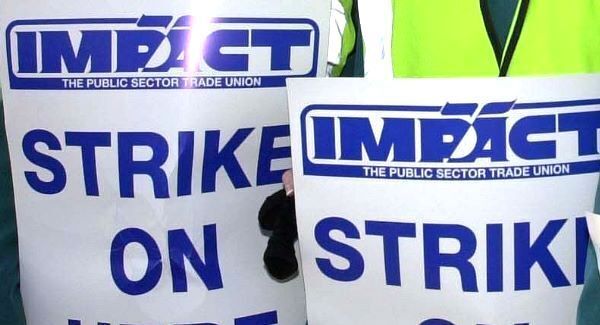
In his union’s Work & Life magazine, Impact head of communications, Bernard Harbor, tells members that Public Expenditure Minister Paschal Donohoe will be “no pushover” in the talks, which are due to get underway in a matter of weeks, “even if his early determination to see out the Lansdowne Road deal to its September, 2018 conclusion wilted in the face of union arguments last December”.
Those talks will begin once the Public Service Pay Commission reports on how the Government’s financial emergency measures in the public service (FEMPI) cost savings, introduced during the economic collapse, should be unwound.
Mr Harbor said the simple removal of the FEMPI measures would be of little benefit to those public servants on the lowest incomes, as the Lansdowne Road deal has “pretty much taken them out of the FEMPI territory”.
He acknowledged that a shock, “or even a hiccup”, on the economic front could cool enthusiasm for a deal.
“Meanwhile, the price of any deal will be measured against other calls on the public purse, including badly needed staffing and capital investment in public services,” he told union members.
Impact has warned that tough lessons were learnt from pay talks in 2009, when, it says, a backbench rebellion scuppered a deal which could have avoided the pay cuts that were introduced.
“Since then, unions have sharpened their political communications, but ‘new politics’ means we have to convince the opposition as well as the Government,” said Mr Harbor.
“Any deal worth its salt will need support across the Oireachtas, so unions will have to convince a lot of politicians that a deal makes sense for Ireland and not just its public servants.
“While an early change of government looks unlikely, the Dáil arithmetic means it can’t be ruled out altogether. And even a change at the top of Fine Gael (or DPER) could alter the Government’s approach, or its timetable for talks.”