Jean-Claude Juncker rejects ‘extremists’ who want to break up Europe
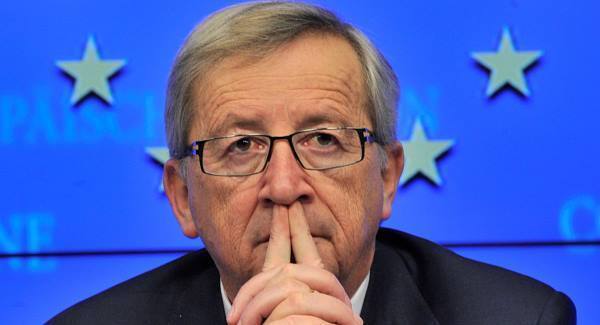
In comments to the European Parliament which are likely to be seen as a comment on Theresa May’s plans for Brexit, Mr Juncker warned that no European country would be able to deal with the challenges of the economy, unemployment, migration and terrorism on its own.
Meanwhile, the man who will lead the European Council when negotiations open said the terms agreed with Britain in any Brexit deal must be “inferior” to the benefits of full membership.
Maltese prime minister Joseph Muscat, whose country holds the six-month rotating presidency of the council, warned that negotiations under Article 50 of the EU treaties would be “arduous” and that the 27 remaining members were “unequivocal” that the principles of free movement of people, goods, services and capital must be maintained.
“We want a fair deal for the UK but that deal necessarily needs to be inferior to membership,” Mr Muscat told the European Parliament in Strasbourg.
“This should not come as a surprise to anyone. Indeed, thinking it can be otherwise would indicate a detachment from reality.”
Mr Juncker welcomed Ms May’s speech on Tuesday, but said Brexit talks could not begin until the European Council had been formally notified of the UK’s intention to quit under Article 50 of the EU treaties, telling MEPs “a speech alone cannot activate negotiations”.
“I will do everything to make sure the negotiations will be according to the rules and will yield good results,” he told MEPs.
However, he added: “Most of our citizens and you and the commission would have liked Europe to react more rapidly and with greater solidarity to the events of 2016.
“Quite often, we end up going down the route of the extremists when we defend their own interests, because they make Europe responsible for all ills.
"I would like to say straight away that they are wrong and they fool these people who think if you close in on yourself and close your doors to migrants that is the way to solve these problems.
"We need to show these people who think that this is the time to deconstruct Europe, to let it fall apart, we have to show them that they are wrong.
“On their own no country will be able to organise the economy, fight unemployment, welcome in migrants and fight terrorism,” he said.
Muscat said Ms May’s tabling of Article 50 — which she has promised before the end of March — will be followed by consultations between the remaining 27 states to establish guidelines which will serve as a negotiating mandate for the European Commission.
These will be agreed at an extraordinary European Council meeting of the EU’s national government leaders around four or five weeks after the invocation of Article 50, probably allowing negotiations to get under way in earnest in May.
The talks will aim to produce a “clear and clean cut from current arrangements” but cannot be allowed to compromise “European rules and institutions”, he said.
He said any new free trade agreement would be unrelated to the Article 50 negotiations and may require transitional agreements.


CONNECT WITH US TODAY



Be the first to know the latest news and updates