Jury to begin deliberating today in Offaly GP trial
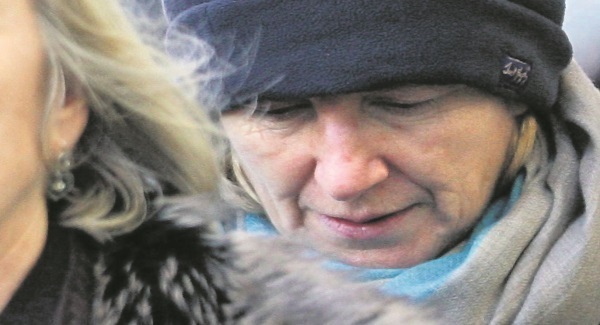
Bernadette Scully, aged 58, is charged with unlawfully killing Emily Barut, 11, who was profoundly disabled, at their home at Emvale, Bachelor’s Walk, Tullamore, Co Offaly. It’s alleged that she killed her by an act of gross negligence involving the administration of an excessive quantity of chloral hydrate on September 15, 2012.
Ms Scully has pleaded not guilty and is on trial at the Central Criminal Court.
Both sides gave their closing speeches on Tuesday, each noting what an emotional case it had been.
Mr Justice Patrick McCarthy then began his charge, telling the jurors to leave all emotion to one side and approach their deliberations in a cool, collected manner.
He also explained the law as it related to the case.
He said they had to be satisfied beyond a reasonable doubt that the accused’s conduct was a substantial cause of death.
He said the State must also prove that the accused had a duty of care to the deceased.
He explained that, for manslaughter, the accused must have failed to observe the ordinary and necessary care expected of her to the point that she was negligent in a very high degree. That negligence must have brought a very high degree of risk of substantial personal injury to others.
He told the jurors that they had to decide what negligence to a very high degree would be and what would bring a very high degree of risk to others.
He explained that the test was an objective one.
“In some cases in these courts, it’s of importance what the state of mind of the person was,” he said. “Not in this case.”
He said that, in theory, a person could be negligent and guilty of manslaughter without even knowing it.
He said that was the general rule.
“There is a modification or there is a gloss on it in the case of professional people such as a doctor,” he explained.
“If a doctor follows general and approved medical practice followed by a substantial number of reputable practitioners, she can follow it without fear of a finding of negligence, unless it’s obviously defective,” he said.
He said a departure from that practice was not necessarily negligent, unless it involved something no similarly qualified expert exercising care would do.
The judge told the seven women and five men of the jury to take as long or as short a time as they liked, but that their verdict must be unanimous