Sellafield disaster would pose ‘no immediate’ risk
However, the study concludes strong food control would be necessary to avoid “long-term consequences”.
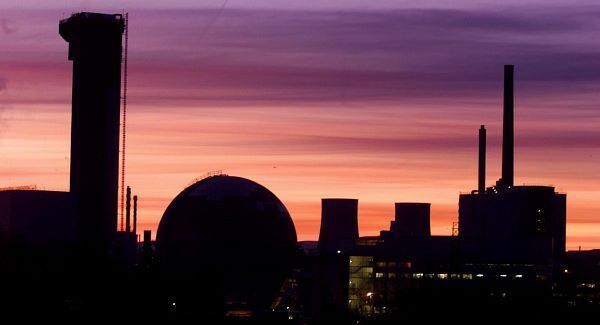
The EPA study examined the potential radiological impact of a “severe” accident at the British nuclear fuel reprocessing plant in Cumbria.
It assessed the potential exposure to radiation for people and contamination of the environment for a year following an accident.
The predicted radiation doses were found to be below the levels that would require measures such as sheltering, relocation or evacuation of people.
However, people could be exposed to “significant radiation doses” by eating contaminated foods.
The National Emergency Plan for Nuclear Accidents provides for the introduction of food controls and on-farm measures to reduce radiation exposure and ensure food is safe to eat.
Programme manager in the EPA’s Office of Radiological Protection, Dr Ciara McMahon said the agency’s role was to advise the Government and the public on radiation risks.
“This report concludes that severe radiological effects in Ireland are unlikely as a result of an accident at the Sellafield reprocessing plant, but food controls would be a key priority in order to protect the public,” she said.
Accident scenarios used in the study included two unspecified severe events where a plume of radioactive material was released into the air.
There were two other scenarios — a meteorite hitting the plant and a large aircraft slamming into it.
Worst case weather scenarios were used, with easterly winds and rain over the east coast of Ireland during the passage of the plume from Sellafield.
The EPA points out that for almost 90% of the time, the prevailing meteorological conditions in Ireland would result in any radioactive plume travelling away from Ireland.
While the estimated radiation doses were not predicted to exceed the need for sheltering, time spent indoors during the plume passage could reduce the radiation dose significantly.
If people stayed indoors when the plume was passing over, radiation doses could be reduced by up to 80%, depending on the building type.
The radiological impact on Ireland was found to be greatest following a possible meteorite hitting the Sellafield site during the ‘worst case’ weather period in May.
The EPA said there would be a noticeable increase in cancers in the decades following an accident at Sellafield if no protective measures were taken.
The main activities at the Sellafield nuclear site include the storage and reprocessing of used nuclear fuel, the storage of plutonium and uranium, and the control of high-level radioactive waste. There are no nuclear power plants in operation to generate electricity at the Sellafield site.
A recent report by the Economic and Social Research Institute found potential economic losses could range between €4bn and €161bn following a nuclear incident at Sellafield.
CONNECT WITH US TODAY



Be the first to know the latest news and updates