Coding to be introduced in primary schools as part of plan to make Irish education system best in Europe
The first Action Plan for Education aims to build on the Action Plan for Jobs which was launched in 2012.
The plan will see hundreds of actions implemented between 2016 and 2019 with a focus on disadvantage, skills, and continuous improvement within the education service.
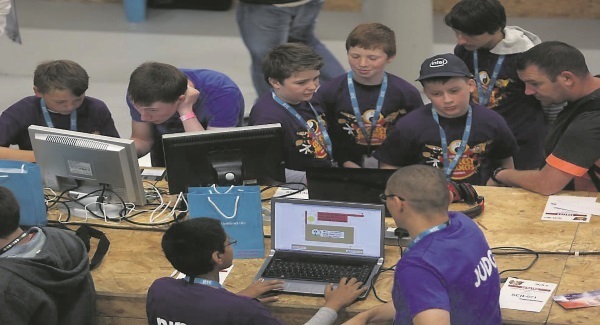
Among the key parts of the plan are the roll-out of coding to primary schools from 2018, teaching of computer science as a Leaving Certificate subject, and processes to introduce teaching of new languages such as Mandarin at second level and to enhance teaching of languages at third level.
A school building programme is also planned, aimed at delivering over 60,000 additional permanent school places; more than 300 extensions to schools; and building 14 schools by 2021.
The plan highlights that the ‘war for talent’ is now one of the most important factors for job. Under the plan, 100 apprenticeship schemes and 50 traineeship schemes are to be introduced, delivering 50,000 registrations between now and 2020. There will also be a 25% increase in increase access to work experience at higher level; a 25% increase in flexible learning; and an entrepreneurship education plan developed.
Tackling education deficits in disadvantaged areas is also a central part of the plan. This will see a new DEIS plan published by the end of the year which will “pioneer new approaches for delivering results”.
Under the plan, it is envisaged that DEIS schools will hit the national average for school retention levels within the next decade — an increase of at least 9%. It also aims to produce a 30% increase in the number of students from disadvantaged areas attending higher level; a five-fold increase in the reach of the Incredible Years teacher programme for DEIS schools; and a six-fold increase in the reach of the Friends programme aimed at supporting children in difficulty.
There will also be an increased focus on mental health and wellbeing and the plan will include the roll-out of a national programme to support the implementation of wellbeing guidelines to all primary and post-primary schools.
New measures are to be introduced to tackle school costs, including a requirement on schools to take consideration of the needs of parents when making decisions that have a financial impact. A strong circular will also be issued to schools regarding uniform costs which will be developed taking into account the views of parents. Extra funding for book rental schemes will also be examined.
The action plan also aims to ensure that the voices of the service users are made more central to the system by developing a Parents and Learners Charter on a statutory basis.
Education Minister Richard Bruton said the goal is to make the education system the best in Europe.
“In this plan, our high ambitions are matched by specific actions to deliver on them, across all parts of the education service. Actions are aimed at improving outcomes for the learners who depend on the service, at breaking cycles of disadvantage, at supporting teachers and institutions to continually improve, at building better links between education and the broader community, and at improving our systems on which we depend to deliver all this,” he said.
Taoiseach Enda Kenny said: “The key priority of this Government is to protect our economy and use it to make people’s lives better. So in using the successful template of the Action Plan for Jobs, the Action Plan for Education brings opportunity and potential to every home, every pupil, every educator.
“It seeks to make Ireland the best education system in Europe. It is the way we ensure equality of opportunity, success, hope and break the cycle of disadvantage.”
See page 7 for more on children and technology