Tributes paid to "ceaseless peacemaker", Bishop Edward Daly
He said: "In a quiet sort of way he had a real influence on the course of events here, the way the IRA campaign ended and the perception people had of the British Army.
"I think that in terms of the immediate impact of Bloody Sunday, especially in the early stages where there was a lot of spin about what had happened, Eddie Daly was adamant and clearly insistent about what had happened. It had a significant effect.
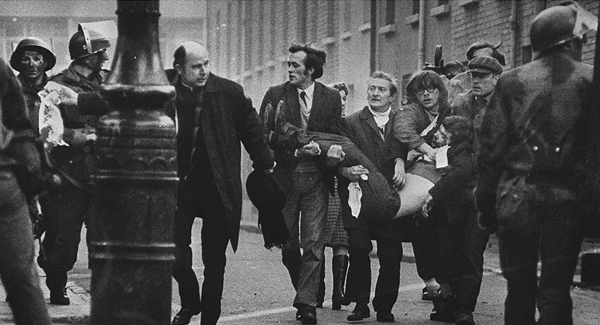
"He was a priest, clearly distressed, describing the killing of Jackie Duddy and saying he did not have a gun and he did not have a petrol bomb.
"I think his words (then) were more influential than just the photograph. He would also criticise the IRA afterwards over the years.
"He was credible. He was quite a conservative man and not a radical priest."
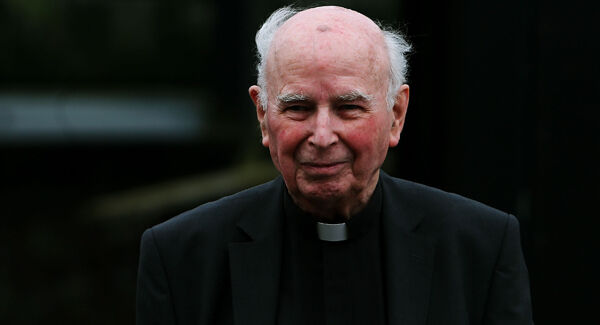
Kate Nash, whose 19-year-old brother William was killed on Bloody Sunday, said Bishop Daly was dedicated to non-violence.
She said: "He has spoken out loudly and bravely on non-violence. He knew what happened on Bloody Sunday and said often that it was murder and he understood the struggle for justice."
She said he and those carrying Jackie Duddy's body could have been shot.
"He was a very brave individual doing that because soldiers were firing at everybody really, he was definitely in danger of getting shot that day."
: The sister of Jackie Duddy, the man who was at the centre of the iconic picture in which Bishop Edward Daly was seen waving his white handkerchief on Bloody Sunday has paid her own highly personal tribute to the late Bishop.
Speaking on BBC radio Kay Duddy, the sister of Jackie Duddy, said her and her families hearts were broken.
"Throughout his life he did everything he could to help people. For us it was such a comfort to know he was with Jackie in his dying moments ... and he had always said he would fight until his dying breath to clear his name."
Kay went on to say the Bishop was "a lovely person and not only did he help people throughout his life as a priest even when retired .. he still carried on trying to help."
She concluded: "For me he was a saint and should have been acknowledged as a hero ... but he was so modest it did not occur to him. He was special friend to us ... and will forever be in our hearts."
Humes deeply saddened by death of ‘dear friend’ Bishop Edward Dalyhttps://t.co/V8G7qxdRbi pic.twitter.com/9KlDuOTPfR
— The SDLP (@SDLPlive) August 8, 2016
The leader of the Catholic Church in Ireland, Archbishop Eamon Martin, has paid tribute to the late Bishop Edward Daly and said he will be will be remembered throughout the country as a fearless peace-builder and a holy and humble faith leader.
Bishop Daly, who famously went to the aid of civil rights protesters gunned down by British soldiers during Bloody Sunday died last night.
The Bishop famously waved a blood-stained white handkerchief as a symbol of ceasefire as he attempted to help a fatally injured demonstrator in Derry in January 1972.
He led the church in the city through some of the darkest days of the conflict and believed the violence of the Troubles was futile and morally unjustified.
Archbishop Eamon Martin went on: "Bishop Edward will be remembered as a fearless peace-builder - as exemplified by his courage on Bloody Sunday in Derry - and as a holy and humble faith leader."
Archbishop Martin said the late clergyman took a personal interest in those who suffered miscarriages of justice.
"His untiring advocacy for the Birmingham Six, the victims of Bloody Sunday and for the families of those murdered by paramilitaries earned him respect from some, suspicion from others.
"As a gifted spiritual leader and communicator, his words touched the hearts of many people, but his ministry was not confined to preaching.
"He walked with his people in their struggles and joys and was most at home out in the streets, parishes and communities of his diocese."
Dr Daly had served in the city since 1962, walking its deprived streets whose inhabitants suffered decades of underinvestment amid violence and political manoeuvring.
He was Bishop of Derry from 1974 until 1993, stepping aside after suffering a stroke. In recent years he has battled a long-term illness.
The clergyman was awarded the freedom of the city last year alongside his Church of Ireland counterpart and close friend Bishop James Mehaffey, hailing the rich "tapestry of cultures" which made up his adopted home.
Archbishop Martin added: "Bishop Edward’s bravery was also apparent in his lived conviction that violence from any side during the Troubles was futile and could never be morally justified.
"He was courageous in speaking out against injustice and took many personal risks for peace and reconciliation."
The cleric was a prolific writer and in latter years helped the dying in his role as chaplain at Foyle Hospice in Derry.
Archbishop Martin said: "He was a gentle shepherd whose immense contribution to the spiritual and moral well-being of the people of Derry diocese during a troubled time shall never be forgotten. He had a sensitive heart and generous disposition; ever caring to the sick, the bereaved, and to victims on all sides of the Troubles."

CONNECT WITH US TODAY



Be the first to know the latest news and updates