French set struggle to extradite Ian Bailey
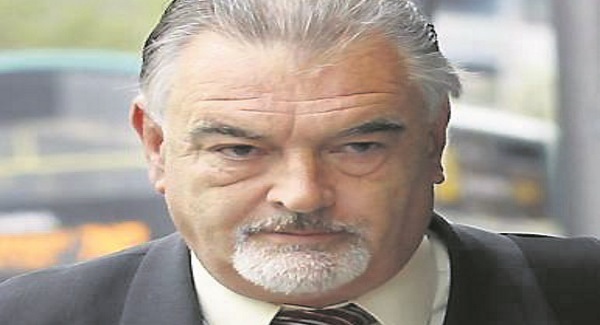
Prof Shane Kilcommins of the University of Limerick said that while the French authorities wanting Mr Bailey to stand trial for the 1996 murder of French filmmaker Sophie Toscan du Plantier was “new territory”, Mr Bailey could make a number of arguments as to why he should not be extradited.
It emerged on Thursday that French Judge Nathalie Turquey had last week initiated efforts to have Mr Bailey face trial in connection with Ms du Plantier’s death in Schull almost 20 years ago, a move welcomed by her son.
Pierre-Louis Baudey-Vignaud said he expected a trial may go ahead in the next 12 to 18 months, describing this as “very good news”.
However, Mr Bailey’s solicitor Frank Buttimer has already labelled the issuing of a second arrest warrant for his client as “a farce” and said any proceedings would be “a show trial”.
French authorities are seeking Mr Bailey under a provision of French law in which it seeks to prosecute people who commit crimes against French citizens in other jurisdictions.
At the time of the issuing of the first arrest warrant, the case in France was at the investigative stage. But Prof Kilcommins said: “France is no longer looking to investigate — they have charged him.” He said that Irish law had a provision since 1861 in which it can ask for an Irish citizen who commits a murder in another jurisdiction to be returned to Ireland to face trial, if the authorities in the other jurisdiction agree and do not proceed with the case themselves. However, he said there was a distinction between that and the French request regarding Ian Bailey.
“What France is asking us to do is have a citizen of the UK surrendered to France for murder in Ireland,” he said, adding that this meant there was no “factual reciprocity” between the two legal systems.
“The laws have to line up and they do not line up,” he said.
Prof Kilcommins also said Mr Bailey could strongly argue that the murder has been investigated here and he has never been charged.
French prosecutors could seek the attendance of a number of witnesses, but it cannot compel them to attend. However, Prof Kilcommins said a trial could go ahead even if Mr Bailey was not present: “They can go ahead, whether he is there or not.”
Mr Bailey has always denied any involvement with the death of the French filmmaker, whose body was discovered near her home on December 23, 1996.
Speaking to the , her son, Pierre-Louis Baudey-Vignaud said: “A new fight begins now. We have no more hope in Irish justice.
“We need to know the truth and the Irish people need to know it.”
CONNECT WITH US TODAY



Be the first to know the latest news and updates