Trolley crisis ‘is more than a hospital problem’
“The message I am bringing here, today, into this building is: ‘Don’t just shove all this on the acute hospital.’ Yes, there is absolutely a role for the acute hospital, but there’s equally a role for the social care division of the HSE, and for the primary care division,” Mr Harris said.
He was speaking ahead of a task force meeting between the Irish Nurses and Midwives Organisation (INMO) and the HSE yesterday.
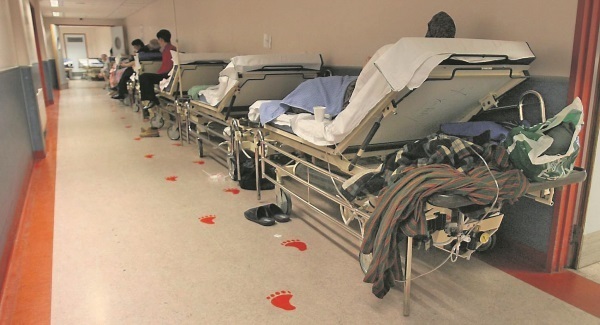
His comments came on the same day as 224 people were on trolleys in Irish hospitals.
“The solution to the pressures being faced by our EDs [emergency departments] does not lie wholly, in any way, shape or form with our acute hospitals and there is a reason there isn’t a Minister for State for Primary Care, it’s because it is my job as Minister for Health to also be the Minister for Primary Care.
“If we are to be serious in addressing the challenges in terms of capacity in our emergency departments, we also have to look at how we can keep people out of our hospitals, what we can provide in the community, we have to look at the responsibility of primary care,” Mr Harris said.
He stated that the HSE’s social care division needs to be utilised fully in terms of providing home-help packages, respite care, and long-term and short-term care beds.
When asked about the 224 people on hospital trolleys around Ireland yesterday, he did not deny the problem, but said the cause needs to be examined.
“The pressure on trolleys remains and there is a need for constant examination of new and innovative solutions.
“We have to look at the reason why people are ending up in hospitals, we have to look at the reason why people end up in hospital after they’ve been clinically discharged,” Mr Harris answered.

The minister will be visiting a number of emergency departments around the country to discuss the issue with frontline staff.
The Irish Hospital Consultants Association (IHCA) also met with the Minister for Health.
Dr Gerard Crotty, IHCA president, said that there needs to be a “significant increase” of hospital beds and access to operating theatres.
“Hundreds of patients are being treated on trolleys every day, over 74,000 patients were awaiting essential surgery at the end of April and the cancellation of surgical appointments is a regular occurrence because of the shortage of hospital beds,” Dr Crotty said.
CONNECT WITH US TODAY



Be the first to know the latest news and updates