Ireland unlikely to receive flood relief aid from EU
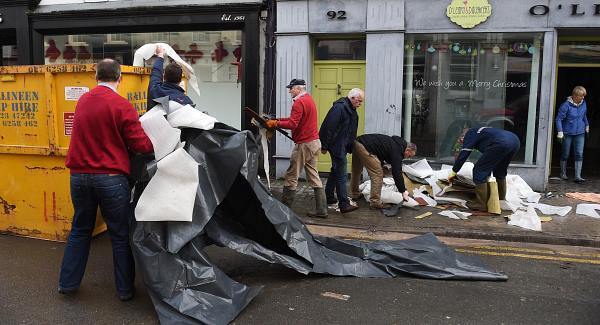
So far the damage to the country’s infrastructure, housing and business has been estimated at up to €60m.
However, under the rules, the damage has to amount to 0.6% of gross national income, which in the country’s strongly growing economy would amount to around €760m.
However, the Government is considering applying for a lesser sum of aid for which the country may qualify if the application is made for “an extraordinary regional disaster”.
Under this heading, Ireland received €13m when specific parts of the country suffered damage worth €521m in November 2009.
The sum Ireland could possibly secure would most likely be less than following the floods four years ago as the the budget for the Solidarity Fund to aid in the aftermath of such disasters was halved.
According to the European Commission the sums available would amount to around 1.3% or €130,000 per €10m worth of damage.
Munster MEP Deirdre Clune has been in contact with the commission and believes that perhaps the best chance the country has of qualifying for aid is from funds made available to regions.
The Fine Gael MEP said that she is in constant contact with the commission to see how Ireland could qualify, and the Department of Finance is considering making an application shortly. It has three months to do so from the start of the damaging storms.
The massive damage suffered by those in the Shannon River basin for instance could possibly qualify but only essential emergency work carried out by the state, including providing families with accommodation, repairing dams, protecting cultural heritage, the clean-up and repairing infrastructure including telecommunications, water, roads, and bridges qualifies.
Since 2002 the fund has been used to help in the aftermath of 56 natural disasters from earthquakes to floods and fires, paying out around €3.6bn to 23 EU countries.
Italy has been the biggest recipient receiving €1.3bn of which €1.1bn was to help the aftermath of the earthquakes in Abruzzo in 2009 and in Emilia Romagna in 2012.
Changes made to the fund two years ago meant it could cover drought as well as the other natural disasters while for regional disasters the threshold was cut to 1% of regional GDP for the outermost regions of countries. It also allowed for advance payments of up to 10% of the total requested.