Ireland's 'green army' prepare for invasion of Euro 2016 finals in France
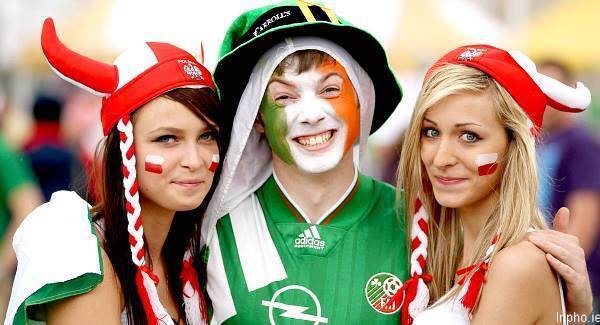
It’s been a long four years since the dark days of Euro 2012 and, thanks to the boot of Jonathan Walters, Martin O’Neill’s men have qualified for two European Championships in a row and only our third ever.
Luckily, the economy is not in quite as bad a state as it was in 2012, so the tens of thousands of fans expected to make the journey to France will likely have a few more euro in their pockets.
However, France may not be quite as cheap as Poland when it comes to food, booze, and lodgings.
If Poland is any benchmark, fans won’t even be waiting to see where to book a bed and a room — transit vans are being converted as we speak as both vehicles of transport and accommodation. Ferry timetables are being consulted.
It doesn’t matter that we don’t know yet where Ireland will be based in France. Fans will just get to the country and figure out the rest from there.
We won’t know who Ireland will be playing until December 12 when the draw for the tournament takes place in Paris. However, as we are set to be fourth seeds, Ireland cannot be drawn against Northern Ireland.

The tournament begins on June 10 and will run until July 10. The host nation will kick off the footballing extravaganza when they take on the second seeded team in their group at the Stade de France. The final will be played at Saint Denis.
There are nine other venues being used for the tournament around some of the major French cities including Paris, Bordeaux, Lyon, Lens, Lille St Etienne, Nice, Marseille, and Toulouse.
Just like the fans, Pat Dawson, CEO of the Irish Travel Agents Association said the value for fans would depend on where Ireland were based for the duration of the tournament.
“It’s obviously great news that we have qualified but everything depends on the draw really. Nothing will be put in place until then.
“The north of France would certainly suit better as it’s far better serviced by ferries and ships. The good thing is that France is certainly much easier to get in and out of than Poland four years ago. However, it’s an expensive country. Trains, accommodation things like that are expensive in France so we will just have to wait and see where the draw puts us.”

As for tickets, while many are sold out, those aimed at the travelling supporters will go on sale December 15.
Depending on how much cash you have to spare, prices vary widely depending on how close to the action on the pitch you want to be.
The cheapest are category four tickets, located very high, very low or behind the goals in the stadium. For the group or round of 16 games, these come in at a pretty reasonable at €25.
However, main stand tickets — category one — are €145. Should we get to a final, you will likely have to fork out in the region of €1,000. Here’s hoping it will come to that.
In two minds about France? Do yourself a favour and go
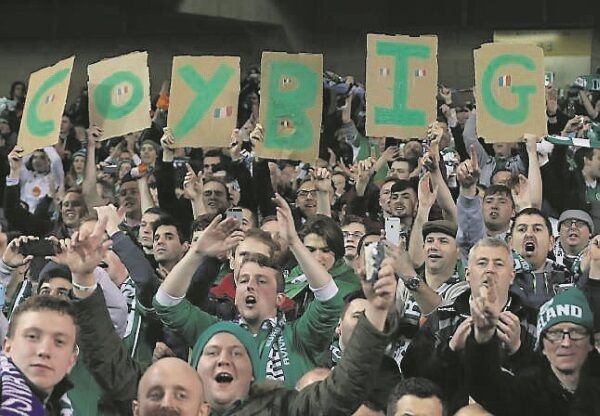
If you are caught in two minds about travelling to France to watch Ireland in Euro 2016, let me settle the argument for you — just go.
I am perhaps better qualified than most to make the recommendation. I have never been the biggest football fan. I am not an avid follower of the League of Ireland or the Premier League.
I take a passing interest in how the national team are doing but only attended a handful of games. My main sporting interests are GAA and boxing.
However, having been sent to Poland for Euro 2012 to follow the fans, I can say there is nothing like attending a major football tournament.
I was a tad too young to be able to experience Germany 88, Italia 90 or USA 94 but Poland 2012 was truly a trip of a lifetime.
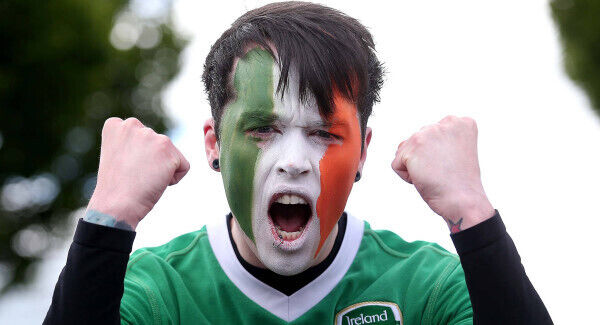
I have since advised anyone I know to put attending a major football tournament on their bucket list. If you love sport, you will experience something truly unforgettable.
It sounds trite but it is true to say the Irish fans bring something different to a tournament that even the most cynical of people can’t help but be swept along in.
Ireland hadn’t been to a European Championships since 1988 and, for the die-hard fans in Poland, this was a hugely significant moment for them.
Before the first game against the Croatia in Poznan, I had rarely experienced an atmosphere like it.
The singing of the national anthem really was spine-tingling and even if the result didn’t go our way, it was genuinely a moment I will not forget. There were to be a few more.
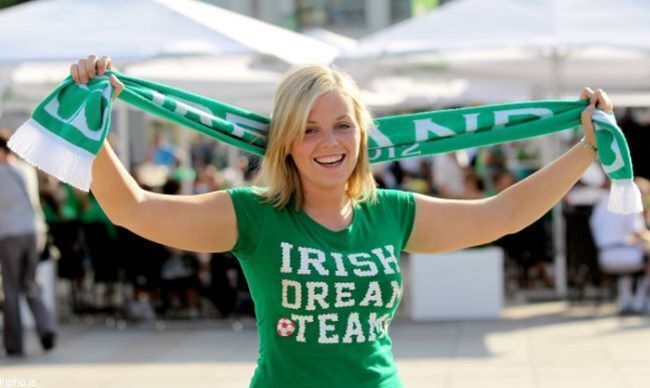
The square in Poznan was packed with thousands of fans every night. Most were drunk, but the atmosphere was never anything other than good-spirited.
Irish people engaged in drunken postmortems with Czech Republic supporters — neither speaking the same language but, somehow, making sense to each other.
Even English fans decided to shun the Ukraine so they could enjoy a tournament with the Irish.
By the time the Spain game rolled around, it was clear Ireland needed a miracle they weren’t going to get. Nonetheless it didn’t stop fans being raucous in their sport.
Roy Keane hammered fans for singing when they were losing but he had somehow missed the point. Being present in the stadium for all that singing was a truly exceptional experience.
It didn’t need explanation, nor did it deserve criticism.
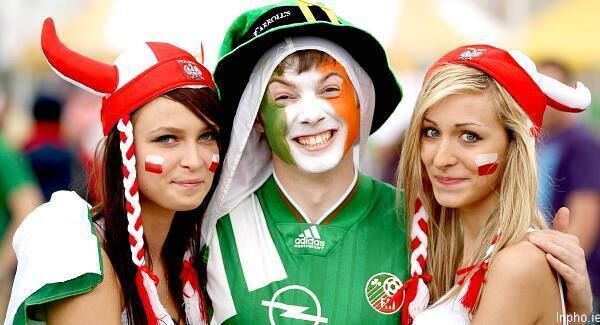
When Ireland played Italy in their final game, I was sitting next to a Polish fan.
When he heard the thousands of Irish fans sing a traditional Polish football song, he became quite emotional. He asked me why Irish people get on so well with everyone.
I had no idea how to answer him, but took a strange pride in the fact Irish people could travel in such large numbers and leave such an impression.
For Poland’s last game, Irish people ditched their Irish jerseys en masse and showed up to the local bars in red.
Again, the Polish people seemed genuinely touched.
It was just a spontaneous Irish way of saying thank you.
France promises to be just as good.
CONNECT WITH US TODAY



Be the first to know the latest news and updates