Court to decide on O’Reilly appeal
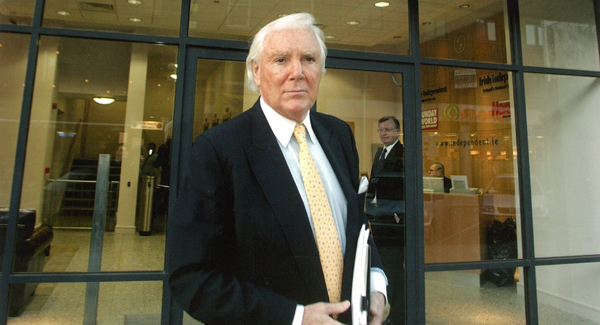
Mr O’Reilly is appealing a High Court decision last June granting AIB an order for discovery in aid of execution of a €22.6m judgment entered against him last year in favour of the bank.
His total indebtedness to AIB stands at around €15m.
Bernard Dunleavy SC, for Mr O’Reilly, said AIB had been advised his client has €13.5m in unencumbered assets that the bank could move against.
“Yet, not only had it not moved against these assets, it had made no attempt to do so,” counsel said.
AIB denies claims on behalf of Mr O’Reilly the application was made as part of a collateral attempt to embarrass the 79-year-old businessman. It says Mr O’Reilly had an interim receiver appointed over unencumbered assets as part of an insolvency arrangement he entered into in the Bahamas, where he is resident.
Mr Dunleavy, in his submissions to the appeal court, said AIB obtained a High Court order requiring the businessman to swear a new affidavit after a judge ruled there was nothing to stop him instructing lawyers and accountants to prepare the information.
Mr O’Reilly then appealed that order and the three-judge Court of Appeal yesterday said it would give its decision today.
Mr Dunleavy previously said AIB had sought the order in an attempt to “humiliate and embarrass” the businessman.
Counsel, in reply to a question from Appeal Court President Mr Justice Ryan, said there was an ulterior motive behind it and that should affect a court’s discretion whether or not to grant the order.
Mr O’Reilly had provided AIB with a statement of assets as he had done for all his creditors as part of the businessman’s personal insolvency arrangement in the Bahamas, counsel said.
While there was a low threshold of evidence for the requirement for discovery in aid of execution of a judgment, AIB had presented no evidence, counsel said.
James Doherty BL, for AIB, said such discovery orders were not unusual in judgment order cases.
The bank had “been given the runaround” when it attempted to serve proceedings on Mr O’Reilly.
A statement of assets furnished to the bank had not been prepared by Mr O’Reilly and could never be sufficient to satisfy the discovery process, counsel said.