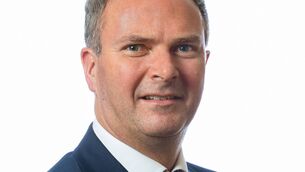
Doubts over funding ‘hurting’ third-level students

The hard-hitting message from Higher Education Authority (HEA) chairman John Hennessy to Education Minister Jan O’Sullivan will increase pressure on her to act on recommendations of a near-complete review of how the system is funded.
In a letter accompanying the HEA’s 2014 annual report, he told her there is little prospect of any of those recommendations being implemented in time to prevent further serious damage to the higher education sector.
“The danger is that it may be several years before any policy can be agreed, implemented and have an impact,” Mr Hennessy wrote in the report published yesterday.
“In the meantime, especially if the number of students continues to grow... current practices will further undermine the quality of the system and its outcomes, impacting on the life chances of graduates and ultimately the health of the economy, as well as undermining the reform agenda,” he wrote.
Mr Hennessy reminded the minister that he had advised her of these issues after last October’s budget, and has again highlighted how employment restrictions have seen staff numbers fall while colleges continue to enrol more students.
“My letter [of November 2014] highlighted the inadequacy of capital funding, with implications for health and safety and an overall deterioration in capital infrastructure and the environment for students,” his letter in the annual report states.
It says the situation has become worse since then in relation to the absence of any resource to support major structural reforms of the third-level system, and the financial vulnerability of a rising number of institutes of technology.
While the minister has promised to act on the outcome of deliberations from a group chaired by Peter Cassells, the minister is unlikely to make any decision in advance of a general election that could mean imposing further costs on college students or their families.
The Labour Party was the subject of a political backlash in 2011 after Ms O’Sullivan’s predecessor Ruairi Quinn reneged on a pre-election promise not to raise student fees or cut grants.
Since then the annual undergraduate student fee has jumped from €2,000 to €3,000, but government funding to colleges has been reduced by the corresponding increase each year instead of boosting their budgets.
The report is published in a week when the QS World University Rankings showed the country’s top universities slip slightly, but some others improved.
CONNECT WITH US TODAY



Be the first to know the latest news and updates