Loose rocks warning at station years before collapse
A report by the Department of Transport’s Railway Accident Investigation Unit noted its rating was expected to worsen within the next five years to a point where it would have serious deficiencies requiring safety netting to be fitted.
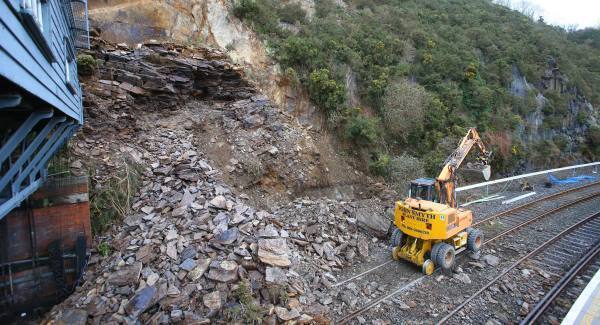
The report examined a rock fall at Plunkett Railway Station in Waterford on December 31, 2013. A large portion of the rockface adjacent to the station collapsed on to the two tracks at 6.45pm.
A passenger train from Dublin which was due to arrive in Waterford 15 minutes later was stopped and returned to Kilkenny station. Iarnród Éireann decided to evacuate and close Plunkett Station on safety grounds.
Nobody was injured as a result of the rock fall but there was extensive damage to the signalling and communications system, which resulted in the station’s closure for several days.
The railway unit’s safety inspectors and a geologist concluded it was unlikely the danger of a rock fall could have been identified during any routine inspection by Iarnród Éireann staff.
They also found it unlikely that any employee would have been able to predict the structure would fail or that there would have been any warning to the imminent rock fall prior to the day of the incident.
However, the railway unit did express concern about how Iarnród Éireann calculated ratings to measure the condition of embankments close to railway lines and recommended it should review its rating system. A separate body, the Railway Safety Commission, had made a similar recommendation in March 2011 but such a review has not occurred to date.
The railway unit also criticised the consistent failure of Iarnród Éireann staff to complete inspection cards properly — a problem deemed an underlying factor in the collapse of the Malahide viaduct in 2009.
A geologist who examined the scene said the immediate cause of the landslide was probably the toppling of the upper part of the rock, which was up to 30m in height.
Possible contributory factors included the actual formation of the rock which was steeply inclined with pervasive joints and faults. Intense rainfall over the preceding weeks is also regarded as the final trigger for the incident.
The report reveals the rockface had been inspected in March 2012 but was not due another inspection until 2017.
The 2012 inspection had noted that a continuation of the rock netting was required along further parts of the rock face, although it was not deemed urgent.
Visual inspections carried out in both March and September of 2013 noted “loose rock fall”, “loose rocks”, “leaning trees”, but no other major defects.

CONNECT WITH US TODAY



Be the first to know the latest news and updates