Five lives saved by family’s brave donation
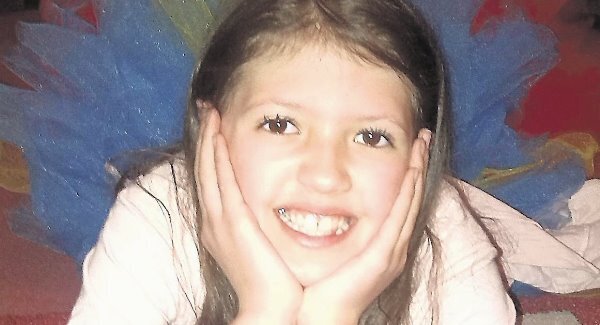
Five people have cause to be thankful for very special gifts this festive season after their lives were saved by a little girl born on Christmas Day.

Five lives saved by family’s brave donation

Nevaeh Gale-Spollen would have been 10 this Christmas Day, but tragedy claimed her life last month.

Nevaeh, whose name is Heaven spelled backwards, died suddenly of a brain haemorrhage after playing on a swing with a friend, aged 5.

She was three days on a life-support machine before doctors pronounced her dead at the National Children’s Hospital in Crumlin, Dublin.

Her grieving family has just heard that Nevaeh’s donated organs have saved the lives of four schoolboys aged nine to 12, and a 34-year-old woman.

The Organ Transplantation Department at Beaumont Hospital, Dublin, has written to her parents, Crystal and Emmet Spollen — who have two younger daughters — that in a time of great tragedy, their eldest girl’s donated organs saved five lives in Ireland and England. The letter said: “All five transplant patients had been very ill prior to their transplants but they all have done very well since their surgery.”

It added: “Both you and your family will have a very special place in the hearts of the recipients, who will be forever grateful to you.”

Professor Jim Egan, director of organ donation and Transplant Ireland, said the family had “the courage of a lion to donate her organs”.

He said that in the past 20 years he cannot recall any child’s organ donations saving so many lives.

Heartbroken mum Crystal, 32, of Meadowview Grove, Lucan, has spoken out for the first time about the tragedy.

Nevaeh was playing on a green opposite her grandmother’s house in Sarsfield Park, Lucan, when she suddenly became ill and collapsed. Just weeks earlier Crystal, who returned to college this year, had written an essay about the joy of Nevaeh’s birth.

She wrote: “My daughter was born on Christmas Day. I fell in love with her the moment I saw her. She was perfect and all mine to love and care for.”

What nobody knew was that Nevaeh was born with a malformed blood vessel on her brain.

Crystal added: “It was something they couldn’t detect. She began to suffer from headaches a couple of months before the tragedy but the doctor said it was probably migraine, that young children suffered from over-concentrating at school or not drinking enough water.

“Her last headache was when we were watching a movie together on TV on Hallowe’en night. Nevaeh said to turn the light off as her head was really sore.

“I said OK, but if it continues I am taking you to the hospital in the morning.

“She fell asleep, and I carried her up to bed. Next morning, she was full of life. The pain had gone away.”

Crystal, who has daughters Sarah, 4, and Alana, 3, fought back tears as she said: “Now it’s like looking into a black hole. I can’t see past today. It’s just so hard to come home and she is not there. She was my best friend. We were always together. She told me about 10 times a day she loved me.”

Life support case of 2001 recalled

The Government recommended that a clinically brain-dead pregnant woman’s life-support machine should be turned off in adherence with her family’s wishes in a 2001 case that is almost identical to the current situation testing Irish medical ethics and abortion laws.

Details of the decision, which occurred 13 years ago at Waterford Regional Hospital and is being closely examined by Department of Health officials, emerged yesterday as a similar case is set to go before the president of the High Court tomorrow.

In 2001, doctors sought the opinion of then attorney general Michael McDowell over the treatment of a clinically brain dead woman who had suffered a severe brain haemorrhage.

The woman had been kept alive on a life-support machine at the south east hospital for 17 days because she was 14 weeks pregnant and it was unclear whether medics could turn off the artificial help due to the eight amendment of the constitution, which outlines the right to life of the unborn.

After examining the case, Mr McDowell issued a written legal opinion to all hospitals stating that it was his view that the situation should be dealt with by “medical ethics” instead of through the courts or from a legal perspective.

In the 2001 case, doctors backed hospital management’s view that they should continue to maintain life-support until a foetal heart beat could no longer be found.

This was based on the opinion of the senior counsel for the hospital, Peter Ward, and constitutional expert, Gerard Hogan, who argued that “under no circumstances should the ventilator be switched off without a court order for so long as the organs of the mother are viable and have not come to a natural end, thereby inevitably terminating the life of the foetus”.

Fiachra Ó Cionnaith

More in this section

Lunchtime News

Newsletter

Keep up with stories of the day with our lunchtime news wrap and important breaking news alerts.

Cookie Policy Privacy Policy Brand Safety FAQ Help Contact Us Terms and Conditions

© Examiner Echo Group Limited