Farrell leaves court over queries about male friend
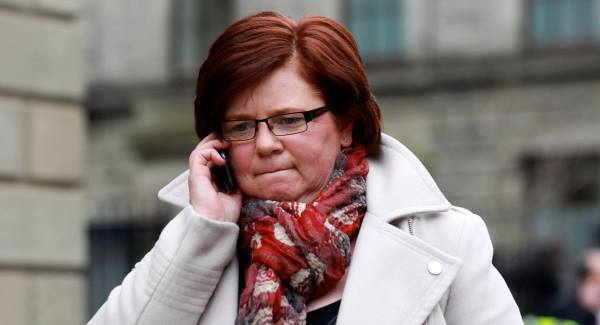
When told by Mr Justice John Hedigan during the civil action by Ian Bailey that she must answer questions from the State about the man’s identity, the Schull shopkeeper said she would not.
“I’m sorry. I am going. I’m having nothing more to do with it,” she said, taking her coat and bag and leaving the witness box of Court No 3 at around 12pm. The court continued to hear evidence from another witness in her absence, and she returned to resume giving evidence at around 3pm.
At the end of yesterday’s hearing, Mr Justice Hedigan told her “any further walkouts will be your last” and she was to “carefully consider” the manner in which she was giving her evidence. There are “very severe sanctions” for perjury, he said.
State counsel Paul O’Higgins had repeatedly asked Ms Farrell to name a male friend whom she was with, unknown to her husband, on the night of December 22/23, 1996, near Schull.
Ms Farrell has said she was with her male friend in a car when they passed a man walking on the road near Schull at about 2am on December 23, hours before the body of murder victim Sophie Toscan du Plantier was found.
On her return, Tom Creed SC, for Mr Bailey, asked if Ms Farrell could hand in the man’s name to the court but Mr Justice Hedigan said he could not permit that as this was a public trial and Ms Farrell had named others in a manner “extremely embarrassing to them and their families”. She must give the name publicly, he directed.
Ms Farrell then named the man as John Reilly from Longford and said her mother had told her he died some years ago. She said she was not sure what age he was, other than he was older than she was, or where she met him.
When Mr O’Higgins said “so you stormed out of court because you might name a man who was dead for 14 years?”, she said she left because she had come to tell the truth about matters involving the gardaí but felt this was “turning into a personal assault on my private life”.
When Mr O’Higgins suggested she was not telling the truth, she said she was and was “gaining nothing from being here only more personal aggravation”.
Later during her cross-examination, Mr O’Higgins put to Ms Farrell that she told a “bare-faced lie” to the jury in denying Mr Bailey had, in a visit to her shop in June 1997, shown her a notebook with her former address in London, told her he knew she was in trouble with social services in England, and threatened her with that information.
Counsel played a video recording of a May 2012 interview with Ms Farrell and members of the Garda Siochána Ombudsman Commission during which Ms Farrell said Mr Bailey had shown her a notebook with her London address and had said he was an investigative journalist.
During the GSOC interview, she also said she, her husband, and her family had to leave London because they owed €27,000 arising from her claiming benefits she was not entitled to.
Ms Farrell said she was confusing fact and fiction during the 2012 interview and her evidence in this case was the truth and Mr Bailey had not threatened her. She said her family left England because of a dispute with her brother-in-law over company account money. A complaint made to social services in England concerning her claiming benefits was found to be unfounded, she said.
When Mr O’Higgins suggested she was used to appearing in courts and is “hoping to sue”, Ms Farrell said she had a case. She denied a suggestion that she was “prepared to say anything if it suits your purposes”.
Mr O’Higgins also said GSOC had resisted “tooth and nail” disclosing the video recordings of the interviews and his side had had to pursue the matter in litigation.
The cross-examination of Ms Farrell will resume today in the action by Mr Bailey against the Garda Commissioner and State over the Garda investigation into the murder of Ms Toscan du Plantier. The defendants deny all of Mr Bailey’s claims, including of wrongful arrest.

CONNECT WITH US TODAY



Be the first to know the latest news and updates