Tourist town keen to stress the positives after bathing ban makes waves in the media
That’s according to those at the forefront of the town’s development as a cultural and heritage quarter.
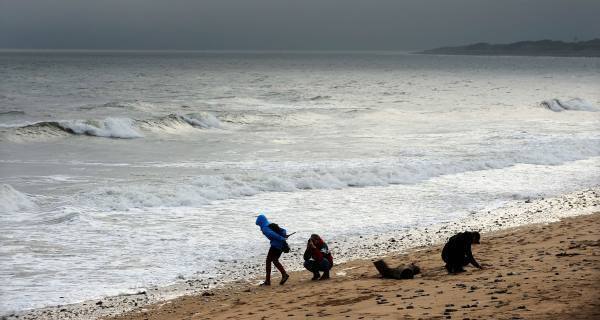
Last week’s reports that the Environmental Protection Agency was set to advise the council to erect ‘No Swim’ signs at the town’s front strand due to poor e.coli results saw Youghal cited by ministers as an example of why Irish Water and those troublesome water charges are needed — so that waste water can be treated and to ensure there won’t be “more Youghals” in future.
Both the headlines and the political spin are unfair, say
two self-confessed blow-ins who have seen immense potential in Youghal and have put their money where their mouths are and are investing in the town’s tourism future.
“I’m disappointed in the way it has been portrayed,” Mark Golden of the Old Imperial Hotel says. “I think, yes there are issues to be brought to everybody’s attention but sometimes we can over-sensationalise things and something can be reported factually and accurately without a sensational headline. There is far, far more to Youghal than one negative headline. It’s not ‘Youghal has closed for business’. They’re giving an advisory against swimming in a section of beach, not even the whole beach, just a section of it.”

Mark lists off the attractions the town has to offer —a heritage trail, the famous boardwalk which reopens next spring, the Collegiate Church, one of the oldest churches in the country with the oldest roofs in Ireland, the old town’s still-intact walls, and the clock tower. None of which, he said, was mentioned when the negative headlines and political spin hammered the town last week.
He feels that Youghal was used to try to deflect negative attention away from the troubled utility. “We can all get our point across, but I don’t agree with using Irish Water as being ‘good for Youghal’ to their advantage to deflect the bad that’s happening in people’s collective dislike of Irish Water,” he says. “I’m not political and I don’t want to offend anybody but I think sometimes elected representatives should sit and think of the damage they can do to one small town in an entire country. They should think before they speak.”
Behind the bar at the Walter Raleigh Hotel, named after the town’s most famous mayor, there is a photograph of a train platform thronged with day trippers from Cork heading to Youghal’s seaside for the day. For the Dublin-born owner, Nick Ross, the town is a reminder of Bray, which attracted day trippers from the city to the seaside. Nick and his wife Grace have invested some €2m in buying the hotel in 2012 and renovating it. Their efforts have been rewarded with a recent upgrade from a three to a four-star hotel.
The Walter Raleigh’s resurgence mirrors Youghal’s developing tourism drive, which has kicked-in in earnest after the closure of textile factories and other industries that were the backbone of the town’s economy.

Nick believes the town’s potential — and its location on a new heritage trail developed to compete with the Wild Atlantic Way— is there to be seen. “I didn’t know a lot about Youghal before I came down here,” he says. “I came down from the Waterford road, so when you come down and drive around the bend and see this amazing estuary, it’s the landscape and the openness of it all you see. That immediately attracted us.”
He also believes that too much has been made of the anticipated warnings about swimming in the front strand, especially considering the positive results afforded to nearby Claycastle and Redbarn beaches, both within walking distance of the town. That, combined with the town’s ar chitectural integrity and the development of its arts and cultural quarters, attracted him to invest in Youghal.
“It’s always a concern when you have anything negative coming out about the town, but it’s a section of the strand. We have three strands and the other two are fine,” he says. “It is a concern but people come to Youghal for more than the strand. The culture and heritage is a big thing here.
“The beach is not closed, the beach is very much open, it’s not as if anyone’s put up a big wall around it. What they are looking at is an advisory notice on swimming at a short section of the beach, and if you look at that beach it’s quite long.
“Youghal is here since the fifth century, it was here before Cork city so we’re here that long, we’ll survive a season without the front strand.”