Call for a return to Fr Mathew legacy
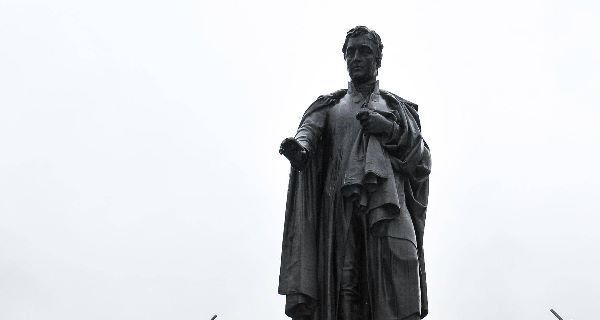
Their comments are contained in a new book which will be launched on Friday to mark the 150th anniversary of the unveiling of the landmark statue of the crusading Capuchin which stands in the heart of Cork City.
“Fr Mathew today may be considered a witness for another era, a great man who has nothing to say to people today. Think again,” said UCC history professor Dermot Keogh.
“His statue is a challenge to those who wish to hook young people on alcohol by making it attractive, sporty, and likely to make one popular. It does none of those things. Think again.”
Prof Keogh is among 18 leading Cork figures who have contributed to the new book, The Statue, by local history expert Antóin O’Callaghan.
Mr O’Callaghan recounts Fr Mathew’s early life in Cork, his temperance campaign, and the difficulties with his personal finances, but the heart of the book is the story of the statue.
He tells the story of who first proposed it, how the money was gathered, the selection of such a prominent location, and the intriguing story of the sculptor — John Hogan, who died soon after winning the commission, and its subsequent transferal not to Hogan’s son, but to JH Foley.
Mr O’Callaghan said he found it refreshing that Cork, at the time, chose to honour a social crusader and “a force for good” with a statue — an honour normally reserved then for war heroes.
Writer Conal Creedon said he remembered, as a child, people giving up drink for lent saying “I’m on the tac”.
“I never really figured out what that was about until later on I realised the tac was the TAC — the Total Abstinence Crusade, you know, that went right back to Fr Mathew’s time,” he said.
Theobold Mathew was born in Tipperary, on October 10, 1790. He was ordained to the priesthood in 1814 and joined the mission in Cork soon afterwards. He founded the Cork Total Abstinence Society on April 10, 1838, which required people to take ‘the pledge’ to abstain from alcohol.
In less than nine months, 150,000 people had signed up. Before the 1845 to 1849 Famine, some 3m people — more than half of the adult population — had taken the pledge. His work had a remarkable impact, with drastic reductions in the numbers of murders, assaults on police, incendiary fires, armed robberies, faction fights, and jailings.
However, some people did turn to diethyl ether, a dangerous chemical, to get intoxicated without breaking their pledge. His movement also forced the closure of breweries and distilleries.
Fr Mathew died on December 8, 1856, in Cobh after suffering a stroke. He is buried in St Joseph’s cemetery in Ballyphehane.
An estimated 100,000 people attended the unveiling of the statue on October 10, 1864, by Cork Examiner founder John Francis Maguire.