Half of young people regret life choices by 21
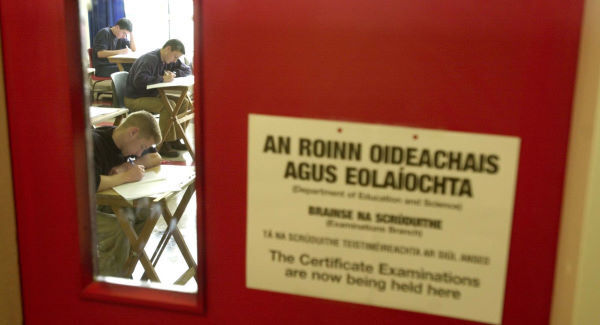
Almost half of those interviewed by the Economic and Social Research Institute regretted the choices they made about work or further education in the years immediately following the Leaving Cert.
The study found only 53% of those questioned three to four years after they left school said they would follow the same path again, with many blaming poor career guidance in school and lack of information about courses for the disappointing choices they made.
Among the most common reasons for their regret were: nCourses being different from what they had anticipated;
nRealising that they did not want to seek employment in their field of study;
nNot being able to secure employment because of the difficult economic context.
Those who went directly into the labour market had the biggest regrets, followed by those who did post-Leaving Cert courses, particularly those who did not go on from a PLC to higher education. Apprentices and those who went straight to higher education had similar levels of dissatisfaction.
Those with the lowest Leaving Certificate grades had the most regrets but high achievers weren’t immune from misgivings with 6% of top grade students also feeling they’d taken a wrong path.
But regrets were higher among those who had attended working class schools than those who attended middle-class schools, even where they emerged with similar qualifications, prompting the researchers to remark: “The experience of regret is a complex one.”
The researchers followed 753 students from 12 schools, 61% who whom had gone on to higher education, 22% to a PLC or apprenticeship and 17% directly to the labour market.
They said school-based guidance had an important role to play in helping pupils avoid choices they would later regret as at least some of the regret was down to pupils choosing courses that were not what they anticipated, dropping out as a result or completing the course without having any desire to work in that field.
Current economic difficulties also influenced how many of the people felt as 43% said of them said it was unlikely or very unlikely they would still be living in Ireland in five years time.
Many already had a negative experience of the jobs market, either because of unemployment or jobs that were below their skill level.
“Even among those who had completed higher education at the time of the survey, only one in six are engaged in the types of managerial and professional positions which may be considered commensurate with their qualifications,” the study found.
Half the higher education graduates and 40% of the PLC leavers felt that they did not use the knowledge and skills acquired through their education in their current job and around half of both groups rated their job as “not at all appropriate to their level of education”.
The researchers said the fact that they were recent graduates and may take time to establish themselves was partly to blame but they said: “The pattern will be of concern if it persists beyond the early stages of labour market integration and young people become ‘stuck’ in these stop-gap jobs.”
A kind word and encouragement from teachers can make the key difference between a pupil continuing in education and abandoning their books after the Leaving Certificate.
The study found where grades were equal, pupils who felt their teachers had high expectations for them and encouraged them to go on to further education or training were more likely to do so than those who had less a positive experience in the classroom.
It also found this mindset formed early in secondary school, with the attitude of Junior Certificate pupils towards post-school education likely to indicate what they would do after the Leaving Certificate.
Report co-author, Emer Smyth, said the study showed how influential the personal approach taken by teachers could be on the future direction of their pupils’ lives.
“Often teachers don’t realise how much they matter, how much a kind word or day-to-day interaction in the corridor can mean to young people. We found that kind of interaction matters for achievement post-school, for how young people view themselves and their abilities.”
The study found gender and social class were strong influences on post-Leaving Cert choices, with boys 16 times more likely to go into apprenticeships than their female classmates, and one-and-a-half times more likely to go directly into the labour market, while girls were two-and-a-half times more likely to take a PLC.
Working-class pupils were less likely to go onto higher education and working-class boys were most likely to get caught up in a negative cycle of poor performance at school, provoking poor reaction from teachers which made them even less inclined to engage in class.
Dr Smyth said the findings also pointed to a “mismatch” between the type of learning at second level and third level which caused difficulties for many students.
“They are moving from a much more teacher-centred learning to project work and self-directed learning. We need more project work at school level to prepare them for that.
“But we also saw an issue around integration into higher education. The young people said if they had someone to talk to or felt there was support, they had an easier transition so colleges can make a difference there.”