GSOC chief quiet on bugging report
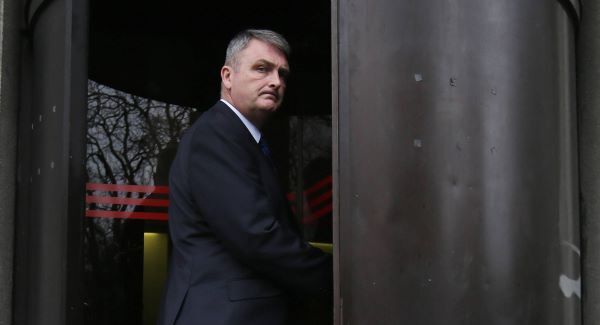
Faced with repeated questioning on the issue from the media at the launch of its 2013 annual report, the GSOC chairman said issues in relation to the Cooke report had been discussed and he wanted to “move on”.
It follows ongoing confusion and calls — including from the largest Garda staff branch in the country — for answers in relation to the suspected physical surveillance mentioned, but not analysed, in the report.
The surveillance included the reported movements of suspect individuals near GSOC offices and an apparently suspicious white van parked outside. There was also the behaviour of a photographer at Dublin Airport who took pictures of staff from Verrimus, the British firm hired by GSOC to conduct a security sweep.
It was this sweep and reports compiled on the back of them that led to the bugging controversy after details appeared in The Sunday Times in February.
The Cooke report also contained a transcript of a phone conversation between a man and one of the Verrimus staff in which there was talk of planting a mole inside the inquiry team.
Last week, the Dublin South Central Branch of the Garda Representative Association called on the three commissioners to resign and asked what action GSOC officers took in relation to the physical surveillance.
GSOC chairman Simon O’Brien yesterday refused to answer repeated questioning from the Irish Examiner and other media on these and related issues.
“Frankly, the issues in relation to the Cooke report have been discussed in many different forums,” said Mr O’Brien. “We believe now is the time to move on.”
He said the report had examined the issues, he had commented on the report, and the Government had accepted the report.
He said in light of this, and a further possible appearance by GSOC before an Oireachtas committee, it was “not helpful” to comment further on Cooke.
Mr O’Brien also refused to comment on the status of the internal inquiry set up to establish who leaked information to The Sunday Times, saying it was “ongoing”.
In relation to the sudden resignation of deputy investigations director Ray Leonard, both he and fellow commissioner Carmel Foley said it was inappropriate to comment on an individual.
Mr O’Brien did comment on the resignation calls from the GRA branch: “We’ve got no intention of resigning. We are discharging an important public function, we look forward to legislature change to the strength of our powers, and are looking forward to our future.”
He reported “encouraging signs” in the relationship between GSOC and the Garda commissioner in terms of accessing information, saying there was “good communication” with interim Garda commissioner Nóirín O’Sullivan.
- GSOC received 2,027 complaints last year, down slightly from 2,089 in 2012.
- The 2,027 complaints contained 5,883 allegations, of which 3,889 were inadmissible or did not require further investigation.
- In a further 1,176 cases, the Garda commissioner did not identify any breach of discipline.
- In 18 cases referred to the DPP, prosecution was directed.
- The highest number of allegations were in Dublin (South, South Central, and West), followed by Tipperary and Cork City.
- The Garda commissioner referred 41 cases of serious harm/death possibly involving a garda in 2013.
- There were five public-interest investigations still open at close of 2013.