Fighting crime begins with location! location! location!
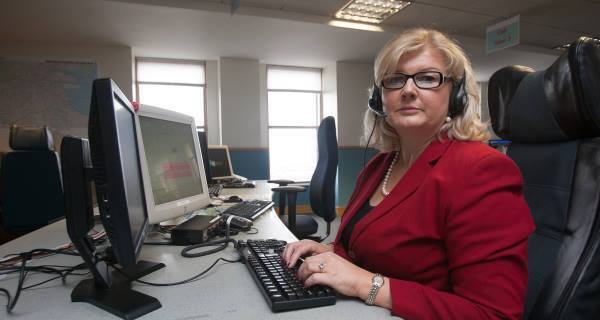
As one of the call-takers at Garda Communications Centre dealing with 999 calls, she handles all sorts of emergencies — from public order to domestic violence, from burglaries to shootings. Victims can be often terrified, agitated and even abusive, she needs to calm them down to help them.
“People act differently when they are stressed,” said Ann. “They talk louder and faster, they can be angry, they can be even abusive, which all makes it more difficult to get their location. And that’s what I need to do — get a location.”
If the caller doesn’t give her this and something happens — the person hangs up, the phone goes dead, or is taken from them — they are at a loss to find them.
Most calls come from mobile phones and this is a real problem, as sending a ping to a mobile phone mast can only give a general location. Ann said the next most crucial piece of information is the type of crime.
“If it’s an intruder, it’s a higher priority than burglary,” she said. “I say to the person to put yourself in a room and I’d say I need a location. If it’s a domestic violence and there is a lot of disturbance in the background and shouting, it’s more urgent and I’d ask if they want me to stay while the garda get there.
“With suicide calls, I’d always try and stay on the line until the garda gets there. You try and build up a rapport and eventually they might give you the address. Nine times out of 10 if they rang saying they were going to commit suicide actually they are really looking for help.”
Ann is the first link in the chain at the Communications Centre in Harcourt Square, the headquarters of the Dublin Metropolitan Region. It handled almost 260,000 emergency calls in 2013, 43% of the total.
Ann and the other 23 call-takers send the details to the garda dispatchers in the same room. They each sit in front of a bank of six screens, including ones detailing maps, the dispatch system, and the Garda Pulse computer system.
“All patrol cars are under the control of the control room and I decide [in my division] which car to send,” said Garda Ken Kennedy. He said this also applies to detective cars.
He said another section, the Armed Response desk, dispatches armed units from the Special Detective Unit and the Emergency Response Unit.
Garda Kennedy gives the details and updates over the Garda radio while they are on their way.
Superintendent Denis Kettle, who runs the centre, which also includes the Traffic Control Centre, said a bad day for dispatchers is when they don’t have enough cars for all the calls.
He likened it to “spinning plates” on those occasions, and said Friday nights can “go mad”.
He said he had a total of 96 staff, they generally had “sophisticated kit”, but the Computer Aided Dispatch system was “extremely old”.
“The most important thing we need to know when someone calls is ‘where are you?’. After that it’s ‘what’s the emergency?’, as you need to know what to send. Some of the calls we get can curl your hair.”