Gilmore Gale finally runs out of steam
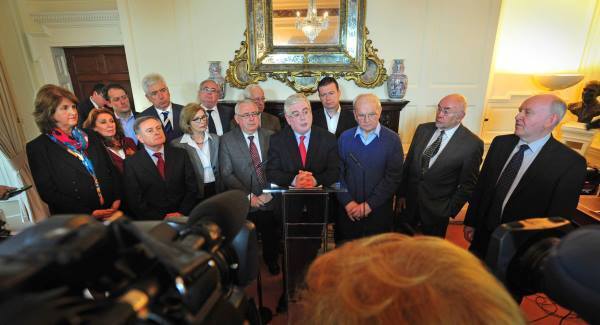
FROM Gilmore For Taoiseach to Gilmore For Scrapheap in three short years: politics can be a rough old game, as Margaret Thatcher once famously remarked.
Not so long ago, Fine Gael was so rattled by the way Eamon Gilmore appeared to be able to tune into, decipher, and enunciate the anger and aspirations of voters when in opposition, they launched a heave against Enda Kenny in order to replace him with someone who could attempt to match the Labour leader’s talents.
Now, Mr Kenny has outlasted a departing Tánaiste, laid low by the fact voters believed he was no longer listening to them, or able to deliver what they needed if he could still hear them.
The so-called Gilmore Gale was blowing strongest in 2010 when masterclass Dáil performances skewered the unfolding Fianna Fáil-Green government day after day, and the Labour leader almost single handedly brought down then ceann comhairle John O’Donovan in a brilliant piece of political theatre during which he seized on an expenses scandal to make it chime with the public’s growing disgust with the antics of the ruling elite to maximum effect.
The Labour surge in opinion polls that followed so panicked Fine Gael in June 2010, Richard Bruton launched an ill-thought coup attempt that was slapped down by Mr Kenny.
This is the point at which Labour began to believe its own spin and launched the ill-judged Gilmore for Taoiseach campaign, as the former Workers Party TD solidly entrenched himself as the most popular party leader in the country.
But winter fell hard in late 2010, as the chill winds of the troika and the humiliation of the bailout finally forced the collapse of Brian Cowen’s enfeebled administration.
A frightened electorate decided economic competence was the issue of the moment. The personality cult of Mr Gilmore now looked frivolous and Labour had to scramble to change strategy in the middle of the election campaign as it desperately attempted to prevent a one-party Fine Gael government.
The Every Little Hurts adverts were unleashed, pledging six key things the party would prevent Fine Gael pushing through in coalition government.
The failure to live up to these promises, to stop water charges hitting €238 a year, cuts in child benefits and a raid on pensions, did more than anything to break the voters’ trust in Mr Gilmore and Labour which was expressed at the ballot box last Friday.
But the honeymoon while it lasted was sweet, with Mr Gilmore leading to 19.4% in the popular vote and gaining 37 TDs.
Failure to use the unprecedented mandate given to Fine Gael and Labour by imposing a tough emergency budget straight after coming to power was compounded by Mr Gilmore’s refusal to take a front-rank, economic portfolio.
Mr Gilmore claimed the foreign affairs role was vital to restoring Ireland’s image and exiting the bailout, but colleagues feared he had taken the easy option, and voters wondered where their opposition champion had disappeared to.
Timidity was also shown in the choice of his top team as he fell back on the old guard of Pat Rabbitte, Ruairi Quinn and Brendan Howlin, rather than the young bloods in the party.
Mr Gilmore’s handling of Joan Burton also caused ructions, as not only was she perceived to be demoted to the post of social protection, she was also the only woman appointed to a full cabinet post by Labour.
Even when it came to filling positions, the next generation were largely ignored as old hands were given plum jobs, provoking much resentment on the burgeoning backbenches — which led to eight TDs to call for a vote of no confidence in Mr Gilmore’s leadership yesterday before they knew he had already decided to fall on his sword.
Though not a broken man in the election campaign, Mr Gilmore, 59, did have the air of someone ready to throw in the towel rather than face a serious challenge.
When the results hit, they hit hard as Labour crumpled to 7%, with even core voters refusing to endorse its record in government.
Labour did have successes, such as restoring cuts in the minimum wage and preventing a slashing of core welfare payments, but a sloppy communications operation stopped these rare achievements getting traction.
MR GILMORE’S self-professed “game changer” as foreign minister was the June 2012 EU summit where Ireland thought it had got a breakthrough deal on bank debt — but as with his infamous election cry it would be “Labour’s way” not “Frankfurt’s way,” the pledge turned out to be mere rhetoric not reality.
Labour’s failure to stamp any kind of moral authority on the Coalition during the spate of controversies swirling around Justice Minister Alan Shatter also helped destroy his opposition promise to introduce a “political revolution” in the way business was done in Irish public life.
An inability to carve out a cohesive Labour narrative on health, protecting the poor, or ending mortgage misery for its aspiring, middle-class voters, all fed into the growing image of a party which had badly lost its way and very sense of political purpose.
In the end, voters decided the much vaunted Gilmore Gale was just bluster and not the wind of change they had been promised.
For more in depth updates and analysis on the fallout from this year's election and access to our comprehensive results database visit our special Election 2014 section.