Labour’s best hope is to wait for voters to forgive, Fianna Fáil-style
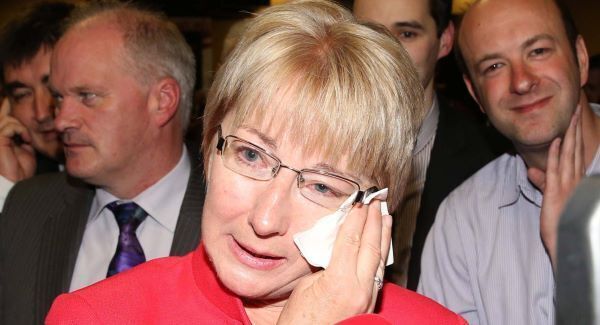
During their long, drawn- out agony of the weekend counting of ballots, the only solace that some in Labour might have taken is that a Haughey and a Hanafin made a return to politics.

Labour’s best hope is to wait for voters to forgive, Fianna Fáil-style

There is a long way back from the wilderness, it seems, and voters are capable of forgiving even the worst of transgressions provided their perpetrators have spent a suitable time out in the cold.

The fate of the former Fianna Fáil TDs and cabinet members who were elected to councils, and the slow but steady return of a party which was almost written off three years ago, might be the best that some in Labour can now hope for.

Labour has — throughout most of its time in the current Coalition — banked on an economic turnaround before 2016 as its only prospect of recovering even a small bit of lost ground.

But time is running out; people have lost faith in the party and it may require an economic miracle to bring it back from the brink. The focus of its recovery might not be on the next general election, but a lot further into the future.

If these elections have told us anything, it is that austerity is not yet finished making its mark on the Irish political landscape.

The first phase of the political fallout from the economic crash was seen in 2011 when Fianna Fáil, the most dominant party in recent history, suffered electoral losses never before seen by a Government party.

The second was seen over the past weekend when Sinn Féin broke the mould to become a fourth force in the party political order, and independent, mostly left-wing candidates, collectively became more popular than any single party.

Voters had already decided to reject Fianna Fáil and give Fine Gael and Labour a chance to do things better. But what they got was more of the same, so they turned to Sinn Féin and the Independents.

What the third phase might be, remains to be seen. But there is no doubt that the time span between now and the next general election — whenever that may be — will be a defining period in Irish politics.

One big question that emerges after Labour’s collapse and Fine Gael’s backlash, is the extent to which the Coalition will destabilise and whether it will see out its full term.

There are many reasons to believe it will. Enda Kenny does not want to be a Taoiseach who cannot hold a Coalition together and will want to see it through is first term to 2016. Furthermore, if he wants to serve a second term, then his best prospect is to do it with Labour — and that will require giving them some concessions to help pull them back from their current trajectory.

On its weekend showing of 7%, Labour will return just two TDs to the next Dáil which will have a reduced number of 158 seats. This would mean Fine Gael having to turn to Fianna Fáil, a large group of independents, or — heaven forbid — Sinn Féin to form a Government.

Assessing these options, it’s likely that Mr Kenny will want to give his Labour partners a bit of a helping hand in the months ahead.

The flip side is that there are around 30 Labour TDs now looking at the prospect of losing their seats as a result of their participation in this deeply unpopular Coalition. Many of them have watched with heavy hearts their friends and colleagues losing seats over the weekend, as the efforts of hard-working campaigners turn to nothing.

These are the people they are often influenced by. They will see a similar fate for themselves and are unlikely to relish the prospect.

This, of course, will make them extremely sensitive to any policy decisions that are seen to heap more hardship on people, which will make the prospect of agreeing a €2bn adjustment, as planned, in October’s budget, all the more difficult.

The leadership and advisers of both Government parties are likely to focus on a reshaping of the Programme for Government, with a softer focus that will no doubt suggest a kinder approach to people in fear of losing their medical cards, and a sweetener of tax cuts for middle income families. But the biggest problem for Labour is that they will lack any credibility in such an approach, given their broken promises of the past, and they lack the connection with the public to really understand what needs to be done to win back this lost trust.

This newspaper reported on a series of cases where people lost their medical cards last autumn — when they were being cut at a rate of 1,000 a month. Yet both Coalition parties continued to ignore the growing crisis and insist it was not an issue. Labour’s Brendan Howlin even went into budget negotiations weeks later insisting that Health Minister James Reilly, find €113m in cuts through medical card ‘probity’.

The alarm bells didn’t seem to ring for anyone in Cabinet about the political consequences of such a measure.

The results of an RTÉ exit poll on Friday showed that medical cards were an issue of concern for 58% of voters — a sentiment that was clearly misread by the Coalition partners. This begs the question: If they’ve been so out of touch thus far, is there any prospect of them winning back the support of the electorate?

The problem for Labour, however, would appear to be more long-term. The rise of independent, left- wing candidates could make it very difficult for the party to win seats in the future.

And the creation, through Sinn Féin’s success, of a four-party system may leave Labour in a difficult place.

A lot has been made over the weekend of how Labour came back from bruising terms in Government in the past. But back in the 1980s, some of its TDs were elected with just half a quota, because of transfers of early eliminations from other left-wing candidates such as the Workers’ Party or Democratic Socialist Party.

Now, it seems, these left- wing groups or independents are likely to get seats ahead of Labour, who will not, therefore, be able to benefit from their transfers

Sinn Féin will also have an impact on Labour into the future, and therefore on the next phase of Irish politics. This weekend’s results not only give Sinn Féin a footprint in many parts of the country where they previously had little or no presence, but also provide them with young, strong candidates at local level who can be nurtured into serious Dáil contenders.

Based on an analysis by Dr Adrian Kavanagh of NUI Maynooth on the RTÉ poll of polls in the campaign, which is not far off the weekend results, Fine Gael would have 45 Dáil seats after a general election; Fianna Fáil would have 38; Sinn Féin would have 32, Labour would have just two.

Independents and others would have 41. The main challenge for that group now is to develop coherence at local level and solidarity in terms of voting pacts in future elections.

This would present three options for forming a government: A coalition of Fine Gael and Sinn Féin, which is not going to happen; A coalition of Fianna Fáil and Sinn Féin with the support of nine or 10 independents, or — most realistically — a coalition of Fine Gael and Fianna Fáil.

All of this is likely to leave Sinn Féin in the position of either entering government or being the main party of opposition — meaning their establishment as a significant force in the South will be well and truly established.

Fianna Fáil could be back in cabinet far sooner than they expected after their 2011 drubbing. And Labour might have little choice but to watch from the sidelines and hope they too can one day recover.

For more in depth updates and analysis on the fallout from this year's election and access to our comprehensive results database visit our special Election 2014 section.

x

More in this section

Lunchtime News

Newsletter

Keep up with stories of the day with our lunchtime news wrap and important breaking news alerts.

Cookie Policy Privacy Policy Brand Safety FAQ Help Contact Us Terms and Conditions

© Examiner Echo Group Limited