‘Politicians delaying handover of schools’
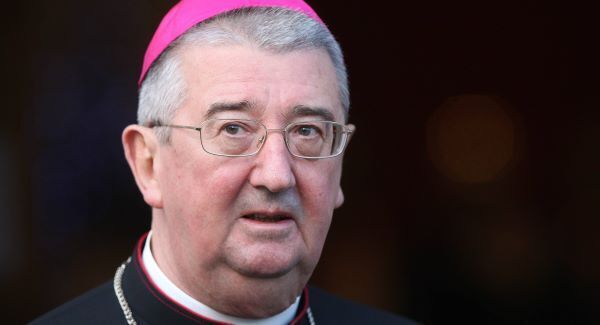
He was addressing the slow pace at which school properties are being given to multi-denominational patrons in towns with enough parental demand to widen provision for those who do not want their children taught in Catholic schools. Although a number of new Educate Together schools will open in September in some of those towns, none yet has a building made available by one of the existing schools as local discussions are continuing on the divestment process.
Dr Martin told the annual conference of the Joint Managerial Body (JMB), which represents 380 religious-owned secondary schools, that pluralism should be welcomed and there is no divine right to a Catholic near-monopoly in Irish education.
“It may seem a paradox, but the longer the Church exercises a near monopoly in primary education, the more difficult it will be to foster and maintain a genuine Catholic ethos in those schools,” he said.
But, he said, his church’s willingness to foster pluralism in educational patronage runs up against opposition, especially at local level.
“That opposition comes often from within local Catholic communities, and it can come — as I have said to the minister — from local political representatives, including some from the Labour Party,” he told an audience that included Education Minister Ruairi Quinn, who addresses JMB delegates this afternoon.
“The problem is that often such opposition to change is precisely just that, opposition to change rather than the affirmation of a real policy of pluralism. When difficulties and resistance arise, then we need to form new working relationships between Church and State to overcome them,” he said.
Mr Quinn was critical last week of what he said was the Catholic Church’s slowness to give examples of how their schools can best cater for pupils of different or no faiths, particularly on the teaching of faith formation.
But Dr Martin - one of the first bishops to put forward the idea of divesting patronage, and who intervened to help address a 2007 shortage of primary school places for newcomer families in Dublin- said most Catholic schools are inclusive and accommodate children of families of different faiths and outlooks. He said the State would fail in its duty if it did not see that citizens can exercise the right to have their children attend schools without any religious ethos, but that it would also go outside its remit if it imposed a radical re-dimensioning of Catholic schools’ ethos.
“One could discuss precisely at what moment in the school day specific religious instruction might take place in the Catholic school. But religious instruction in the Catholic school should not become just an added extra, much less a marginal appendix to the particular understanding of education which is the mark of the Catholic school,” he said.
Meanwhile, JMB says schools are at breaking point trying to cater for students with special needs because resource teaching hours are 15% less than what they should be as a result of Department of Education cuts. Due to limits on posts it allows the National Council for Special Education allocate, 45 out of 77 schools whose principals answered a JMB survey have lost 10 to 20 hours a week of resource teaching since 2010, and 18 others have lost up to 50 hours a week.
JMB general secretary said one-to-one teaching by specialist teachers, pastoral care, small-group learning support classes, and staff training and co-ordination in relation to special needs have all been affected by the cutbacks.
CONNECT WITH US TODAY



Be the first to know the latest news and updates