New science courses lack detail, says expert
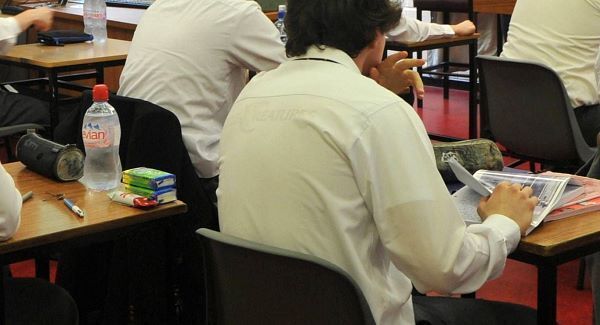
The draft syllabi in biology, chemistry and physics, currently before Education Minister Ruairi Quinn for approval, set out the topics and learning outcomes that students should achieve. However, the National Council for Curriculum and Assessment says it will not set out depth of treatment or range of subject knowledge in these or any future syllabus specifications.
In a report for the Irish Science Teachers Association, UCC emeritus professor of education Áine Hyland said the reforms being adopted are not in line with international best practice.
She said more detailed information must be provided about the depth of treatment of subjects and requirements for examination.
“Such information could be in the form of course and unit support notes or study design, or a comprehensive chemistry interactive syllabus,” said Prof Hyland.
She said these are provided in exam syllabi in Scotland, the Australian state of Victoria, and by the International Baccalaureate Organisation. The Hyland report also suggests the “depth of treatment” approach which Irish chemistry teachers have been familiar with for the past decade would be another option.
“While learning outcomes are a very valuable tool for identifying what learners should know and be able to do at the end of a course or programme, it is not appropriate to use learning outcomes alone to define a syllabus and its assessment,” said Prof Hyland.
“If teachers focus only on learning outcomes, there is a real risk that teaching and learning targets will be at a minimum rather than a maximum level, that the bar will not be set high enough for student learning, and that as a result, standards will fall.”
Prof Hyland has written various reports for the Department of Education or other State bodies, including recent discussion papers on teacher training and college entry system reforms, and chaired a commission on the college points system that reported in 1999.
NCCA chief executive Anne Looney told the ISTA last October that a move to a learning outcomes approach for all primary and second-level subjects is based on research in teaching, learning and assessment, and international practice.
While examples of teaching, learning and assessment approaches to support classroom planning are also proposed, ISTA chairwoman Mary Mullaghy said its concerns appear to have been ignored. “The fundamental design used to draft the syllabi is flawed and this design needs to be changed from that of a syllabus simply containing a list of topics and learning outcomes to a design that incorporates depth of treatment, laboratory practical activities, teacher demonstration experiments, and science, technology and society material,” said Ms Mullaghy.