Special report: Raising awareness of HHT
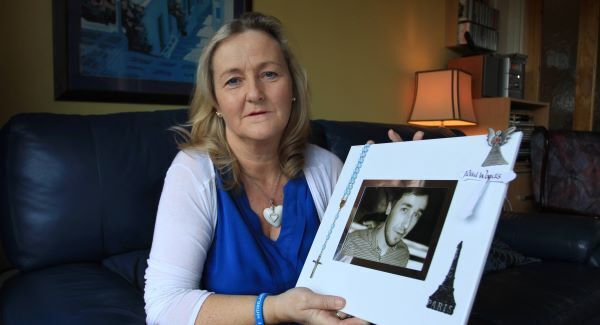
Dara Woods and her daughter both suffer from HHT, a genetic disorder of the blood vessels.

Special report: Raising awareness of HHT

Her son, Paul, died from the condition two years ago. The main symptoms of Hereditary Hemorrhagic Telangiectasia are nosebleeds and small, red spots on the hands and face, or in the eyes and mouth.

“My first child, Paul, was born in 1989. By the time our daughter, Katie, was born, I realised that I possibly had HHT.

“I was bedridden throughout both pregnancies, suffering from constant and severe nosebleeds which required many blood transfusions and iron infusions,” she said.

From an early age, both Paul and Katie began to show signs of HHT. There is a 50% chance the child of a HHT sufferer will inherit the mutated gene which causes the illness. Since both children suffered from unexplained nosebleeds, Dara suspected they had both been affected.

“Thanks to Mike Nolan’s appearance on The Late Late Show in 2003, I learned about a newly established Centre of Excellence for HHT — the Mercy Hospital in Cork.

“Mike lost his nine-year-old daughter, Grace, to HHT of the lungs. She was undiagnosed at the time of her death. This led to Mike and his wife, June, setting up the Centre of Excellence.”

Under the guidance of Consultant Radiologist Adrian Brady, a team of experts was established in the Mercy Hospital to identify HHT sufferers.

Dara and her husband, David, from Swords, Co Dublin, brought their children to the hospital — both were diagnosed with HHT. Paul was 12 at the time and Katie was 9.

“Both had HHT in the lungs and the gastrointestinal tract. No abnormalities were found on the brain, but Paul required embolisation of his lungs immediately and was checked every 12-18 months after that for follow-up embolisations.

“Katie, however, was luckier as her lungs did not require embolisation, just frequent monitoring. Both kids were able to manage their frequent nosebleeds discreetly, so much so that very few of their pals even knew they had HHT.”

Ten years later, Paul travelled to France with his girlfriend. They had both just completed their final exams for their degrees in Environmental Science at DCU. One evening Paul experienced a severe bleed in one of his lungs and collapsed. He died instantly.

“We understand that nothing is going to bring Paul back to us. However, we feel we must do something to raise awareness of HHT. We’ve set up a charity called HHT Ireland.”

On Saturday, the first ever Irish HHT Patient/Family Forum was held in the Maldron Hotel Portlaoise.

Hosted by the Grace Nolan Foundation, the meeting catered for HHT sufferers and their families.

“The medical world needs to hear more about HHT and its treatment. Around 90% of sufferers go undiagnosed. This has got to change,” Dara said.

To contact HHT Ireland, or to make a donation, go to hhtireland.com. To contact the Grace Nolan Foundation, or to make a donation, go to gracenolan.com

More on hht.org

HHT — the facts

— HHT is a genetic disorder of the blood vessels.

— Approximately 1.4 million people suffer from HHT worldwide making it uncommon, but not rare.

— The main symptoms are nosebleeds and red spots on the hands or face, in the mouth or eyes.

— If the affected blood vessel is small, it’s called a telangiectasia. Telangiectasias most commonly occur on the face and hands and lining of the nose and mouth. They are the cause of the red dots and the nosebleeds.

— If the affected blood vessel is large, it’s called an arteriovenous malformation or AVM.

— These commonly occur in organs such as the lungs and brain. These can lead to serious complications such as brain haemorrhage and stroke.

— There is no cure.

x

More in this section

Lunchtime News

Newsletter

Get a lunch briefing straight to your inbox at noon daily. Also be the first to know with our occasional Breaking News emails.

Cookie Policy Privacy Policy Brand Safety FAQ Help Contact Us Terms and Conditions

© Examiner Echo Group Limited