RNLI to recruit volunteers for Union Hall lifeboat trial
The RNLI’s board of trustees gave the green light to test a rapid-response inshore lifeboat service in Union Hall, Co Cork, over the next 24 months following a meeting on Wednesday night.
Great news! We've had approval to trial a new station at Union Hall in south west Cork. http://t.co/0hiZvn98vD
— RNLI (@RNLI) November 7, 2013
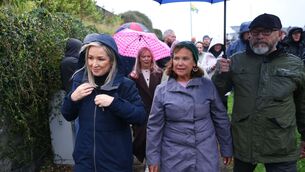
Local campaigners, who in the wake of the Tit Bonhomme tragedy prepared a detailed submission for the RNLI calling for a lifeboat station in the fishing port, warmly welcomed the announcement.
“This is really fantastic news. Union Hall is one of the last major commercial fishing ports that doesn’t have a lifeboat facility,” said Paddy O’Donovan, chairman of the Glandore Harbour Inshore Lifeboat Committee.
“The Tit Bonhomme tragedy was the catalyst which focused people’s minds on the need for a lifeboat service here.
“While it’s too late for those unfortunate people, it is a very welcome development. The real work starts now,” he said.
Five men died when the Tit Bonhomme went down at the mouth of Glandore Bay on Jan 15, 2012.
The tragedy prompted the committee to prepare a submission for the RNLI last May calling for a lifeboat base in Union Hall.
Following its own detailed assessment of the area, the RNLI recommended to its board the sanctioning of a €130,000 investment in the two-year trial of an inshore lifeboat in the port.
The station will be based in temporary facilities on the pier in Keelbeg.
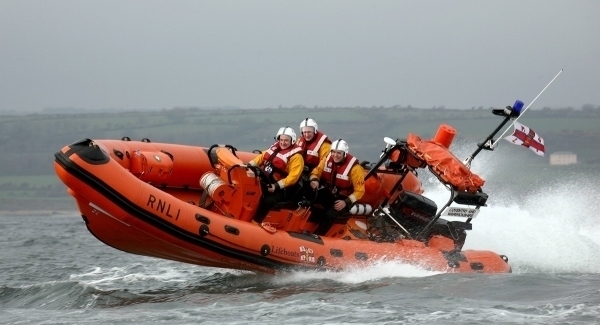
It will operate a powerful RNLI B Class lifeboat, drawn from the charity’s relief fleet.
The 7.3m rigid inflatable boat can reach speeds of up to 32 knots. It is fast, manoeuvrable, reliable, and can operate in bad weather.
It will work closely with RNLI lifeboat stations at Baltimore and Courtmacsherry.
The station will need up to 23 volunteers — up to six helms, eight crew, a lifeboat station manager, launching authorities, mechanics, and support and admin staff.
The crew will get their initial training at the RNLI’s central training headquarters in Poole, England.
“We hope to start the first training courses in February and declare the station operational, and a fully deployed asset of the Coast Guard by next June,” said Ronan Boyle, RNLI’s Ireland south divisional operations manager.

CONNECT WITH US TODAY



Be the first to know the latest news and updates