€3k fees just to apply to debt service
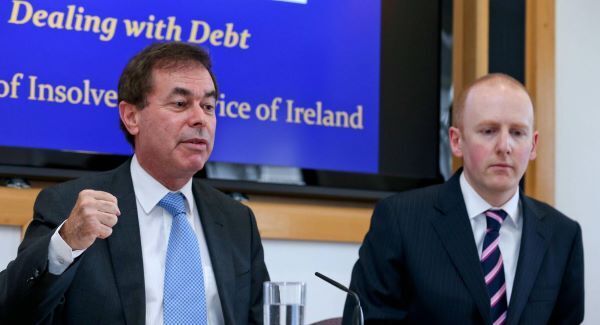
Only 37 people have thus far been trained as personal insolvency practitioners (PIPs) — the people charged with assessing the insolvency applications, taking them through the process, including liaising with the applicant’s creditors.
Brian Walker, a barrister who has trained PIPs, said hundreds had gone through the qualification process but many may choose not to start processing applications because of the high cost of entry into it and the expectation they may not get paid for the work.
“The people I have been speaking to have said that, for all the work involved, they will need an upfront payment of €2,000 to €3,000,” he told RTÉ.
“The fees alone to the Insolvency Service for a personal insolvency arrangement are €500 that has to be paid out.”
Noeline Blackwell of Free Legal Advice Centres agreed, saying people would still need to be paid in cases where they processed the debtor’s application but the person was not admitted onto one of the Insolvency Service’s new schemes.
However, ISI director Lorcan O’Connor said while the service does not yet know how the fee structure will work, he expected it would be reflective of practice in other countries.
“Therefore, in the vast majority of standard cases, the fee will be paid out of what’s available to creditors so the debtor will not be required to pay an upfront fee to a practitioner,” said Mr O’Connor. “But there will no doubt be some very complex cases that may well require an upfront fee.”
Concerns have also been raised about the high number of people who will be ineligible to apply.
Mr Walker said about 40% would be turned down at the first assessment phase as they have not been engaging with banks in the mortgage arrears resolution process, a prerequisite for being accepted onto a personal insolvency arrangement.
Fears have also been expressed that when a PIP approaches a bank about an individual’s debt to it, too many banks will activate their veto to the application being processed.
Referring to the voting process creditors are asked to engage in, Mr O’Connor said: “All other common law jurisdictions around the world have these arrangements. All of those countries have a voting mechanism and it works. These kind of arrangements, while they are obviously of benefit to the person who owes the money, are also of benefit to the creditor because it is an efficient way to deal with the problem loan. The average return to a creditor through one of these arrangements will be far higher than it would be in bankruptcy.”
Yesterday in Limerick, Finance Minister Michael Noonan was asked about the necessity for ISI to publicly name those accepted onto its schemes.
“I think it is in the interest of everyone trading,” said Mr Noonan. “It is important to known who is in an insolvency arrangement, in the normal course of an economy, because we don’t want the situation to become worse.”
Mr Noonan accepted a public register, with names of those availing of the arrangement, may put some people off. “Obviously it is not for everybody,” he said.
“Some people will try and make direct arrangements with the people they owe money to. If somebody is in debt and has a lot of creditors here in the (Limerick) city for example, it is no big secret. So there isn’t a huge breach of confidentiality, but it is in the interest of protecting the interests of everybody else. I hope it works. I think it will.”

CONNECT WITH US TODAY



Be the first to know the latest news and updates