Rare birds bred in captivity for the first time
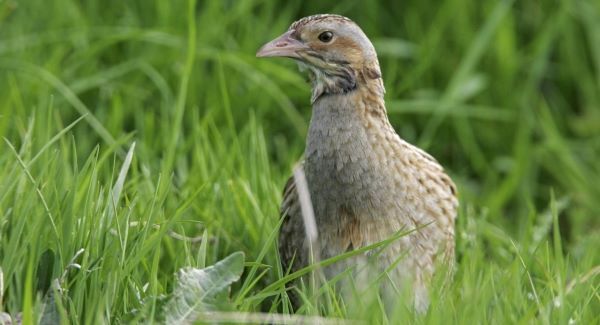
The National Parks and Wildlife Service and Irish Grey Partridge Conservation Trust are working together on the groundbreaking trial in County Offaly.
Fota Wildlife Park — which has a similar project taking place — is assisting the groups in the experimental captive breeding programme.
The programme is at a trial stage and the current captive-bred chicks will not be released into the wild, as they are not part of the Irish corncrake population.
However, the trial is being carried out in the hope that wild Irish corncrakes can eventually be reared in captivity.
Kieran Buckley, the Offaly-based NPWS conservation ranger said Ireland’s corncrakes “are on an extinction trajectory” which needs to be reversed.
He thanked Fota Wildlife park director Sean McKeown for supplying birds for the Offaly experiment.
“The reason why it is taking place is it will be another tool in our management strategy for the recovery of the species,” said Mr Buckley.
A pair of corncrake eggs were incubated by the Grey Partridge Conservation Project team in Offaly earlier this year.
Two chicks were successfully hatched and are now being reared with the help of captive breeding manager Paddy Kelly.
“It’s almost like a newborn baby, they need constant attention. They feed the birds every hour during the day,” said Mr Buckley.
Should the programme prove successful, the conservation team will consider taking eggs from wild birds’ nests in locations prone to predation, flooding, and other threats.
Although corncrakes have two or three clutches each year, a high percentage of their eggs are often lost. The team hope to collect a portion of eggs from wild clutches if the project is approved.
These eggs can be incubated and the chicks reared before being brought back to the nesting area as fledglings. All the feeding and rearing is done without any physical contact.
“What is motivating here is to try and help the recovery, we want to prevent a reintroduction,” said Mr Buckley.
“This experiment is just a way of developing a new tool to assist in the overall recovery.”
A decision on whether to rear wild corncrakes in captivity will depend on the outcome of the experiment.
“The policymakers at the NPWS, they will decide whether to say yes or no,” said Mr Buckley.
While the captive breeding may be helpful in protecting the species, Mr Buckley emphasised the need to tackle issues such as habitat depletion which, he said, are contributing to the corncrake’s decline.
CONNECT WITH US TODAY



Be the first to know the latest news and updates