Marielle faces anxious wait for citizenship after sitting Leaving Cert
But even if that comes through and allows her free college access, it will be little consolation to her older sister, who missed out on the chance to train as a nurse for the last two years.
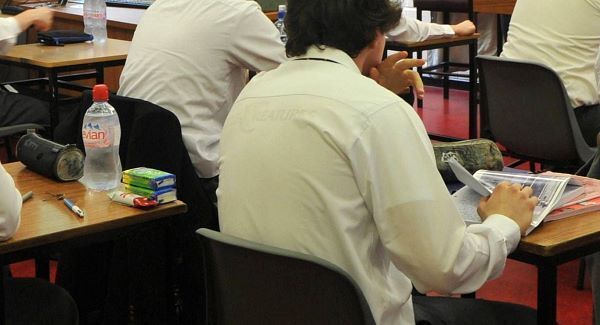
Marielle Cruz is 18 and finished her Leaving Certificate almost a fortnight ago at St Aloysius’ Secondary School in Cork City. She entered first year there when she arrived in Ireland with her father Bart and older sister Marisol in 2007.
The girls’ mum, Susie, came to Cork a year earlier to take up a staff nurse job at the Cope Foundation, working with people who have intellectual disabilities.
All Marielle’s friends have also applied for college, but she and some classmates — one from India and another also from the Philippines — face the prospect of fees of at least €9,000 in most colleges because they are non-EU students.
Susie has just been approved for Irish citizenship, but the girls can only live in hope that their subsequent citizenship applications will be cleared in time to register as EU students just like other Irish undergraduates in the autumn. This has been more than a distraction for Marielle and some classmates over the last year.
“There’s that added pressure on us; we’re thinking of the points like everyone else, but at the same time we’re thinking about the fees and whether we’ll be able to accept a college offer,” says Marielle. “It’s definitely added pressure.”
Her first choice course on her CAO applications is the children’s and general nursing degree in University College Cork, although she is also toying with the idea of biological and chemical sciences as an alternative.
Both courses required well over 400 Leaving Cert points for first-round entry through the CAO in recent years, but if her older sister’s record is anything to go by, Marielle should be in with a good shot.
Marisol is now 20 and did her Leaving Certificate in 2011 at the same school. After scoring 435 CAO points, she accepted a place in another UCC nursing degree. But even with the college recognising her time at school here and offering to charge EU rather than non-EU student fees of €9,000, the family could not afford that and the study offer lapsed last autumn.
She did a nursing studies course at Cork College of Commerce in the meantime, for which fees of €3,000 applied instead of the €450 payable by EU students, and she emerged a year ago with distinction in all eight subjects for her Level 5 award.
“I had to make a newapplication for this year [to UCC] but we are only able to start now applying for citizenship,” says Marisol.
The girls’ mother has recently been notified that her naturalisation has been approved and the family looks forward to her oath-taking ceremony in Dublin.
However, their concern now is whether the girls’ citizenship applications will be processed in time for them to register in college by September with the same treatment as Irish students for fees or grants.
Bart has been doing most of the paperwork for his daughters, and while he says things have improved, the level of red tape remains difficult.
Since completing her Level 5 course, Marisol has been getting relief work at a nursing home as a care assistant/nurse’s aide. Although she gets a lot of work, she says she would much prefer to be studying for a nursing degree.
“I’m feeling crap really, because two years is a long time to wait just to attend the college,” she says. “My mom pays taxes, I’ve spent enough time here, and I like living in Cork.”
Most of Marisol’s friends from school have gone on to college and are now completing second year. Some of them having gone to colleges outside of Cork.
“It’s always been a goal for me: Ever since I was a child, I wanted to be working in healthcare,” she says.
While some might argue that the rules are right to charge higher fees for non-EU students, Marisol said her circumstances are different. “It’s fair enough to say that, but we’re paying tax, we should have just as much right as anyone else who has gone to school here to have the chance to go to college.”
Bart agrees and he will be free to work here with a revised immigration status once his wife’s citizenship is formally confirmed. But his biggest concern is for his daughters, who have been working so hard towards their career goals.
“I think everyone agrees that Ireland depends on young people for its future,” he says. “It’s such a great loss not to harness the promising talents and potential of all these people.”