15 children crush fingers in doors every week
Boys were only slightly ahead of girls for fingertip injuries, according to research just published by the Irish Association of Plastic Surgeons (IAPS).
The association found that its members are treating almost five children a week for fingertip injuries in Our Lady’s Hospital for Sick Children in Crumlin, Dublin.
Fingertip injuries have also emerged as the most common type of injury presenting at paediatric emergency departments, according to the IAPS study, which looked at fingertip injury repairs conducted between Nov 2011 and Nov 2012.
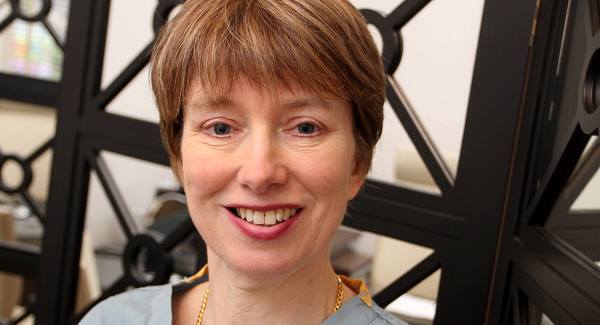
“Based on this research, it’s safe to say that at least 15 children a week nationwide have to go to hospital with crushed finger injuries,” said IAPS president, Dr Patricia Eadie.
She said most of the injuries could be avoided with a €3 rubber doorstop — the “kid-proof” kind which grips the top of the door, stopping it from closing completely.
The doctor said in some cases the top of the fingers could be sheared right off.
“Completely amputated fingers can be re-attached either as a simple grafting technique if the amputation is beyond the last knuckle, or by microsurgical techniques if the part is longer.”
Dr Eadie said that where a finger has been cut off, an adult should wrap the severed digit in a moistened cloth, place it in a plastic bag and cover the bag with ice before bringing it and the child to an A&E as quickly as possible.
“Also, as there have been cases of family pets getting to a severed finger; it’s important to be aware of this, and to pick it up as quickly as possible and put it somewhere safe.”
She said sometimes the damage to the fingertip was so severe that the finger was shortened to a healthy area of undamaged tissue.
“Perfectly normal function can still be achieved, although the fingertip will never grow back.”
A survey of operations carried out by IAPS members found that 74 patients healed within two weeks, 64 at three weeks, while 65 took longer than three weeks.
A significant number of patients failed to keep their follow-up appointments and Dr Eadie said it could be assumed that there were no long-term problems.
Of the 108 patients who attended a follow-up appointment, 90 had healed perfectly, but 18 had deformities, including misshapen or partially-destroyed nails.


CONNECT WITH US TODAY



Be the first to know the latest news and updates