Fears for lives as cuts hit road budgets
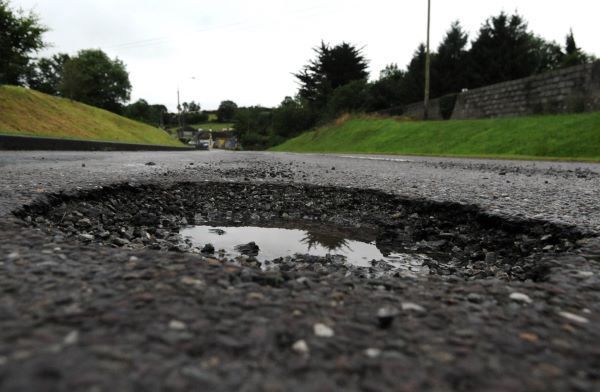
As councils put the finishing touches to their 2013 spending plans in the past fortnight, almost all were making cuts in allocations to the upkeep of the regional and local roads under their control.
For most of the areas affected, the reductions will be the third successive year they have had to trim their roads budgets — a trend AA Ireland said was not sustainable.
AA spokesman Conor Faughnan said: “We would reckon that across the country you could be looking at a 15%-20% reduction in spending on roads. In our view that is really just asking for trouble in the future.”
The country has about 6,000km of motorways and national routes, which Mr Faughnan said were being reasonably well maintained despite the cut to the National Roads Authority’s budget. However, he said he was particularly concerned about the 96,000km of secondary roads which carry roughly half of all traffic in Ireland.
Of the 29 county councils queried by the Irish Examiner, just four were confident of being able to maintain at 2012 levels their budgets for these roads into next year.
While road grants from central government will not be determined until the new year, most were factoring into their projections an expected reduced allocation. In some councils, the value of the annual non-national road grants have fallen by more than 50% since their peak in 2008.
Some councils said planned repair and improvement works were being postponed rather than cancelled. Mr Faughnan said this would only drive up the cost and the risk factor in the long run.
Road deaths are currently at their lowest level since records began, but there are fears that the progress made could be lost due to restricted finances. The majority of fatalities occur on secondary roads which have widely varying standards of width, visibility, and markings, and are more vulnerable to deterioration in bad weather.
“Roads are not like fine wine — they do not improve with age,” said Mr Faughnan. “In many cases, the secondary roads network are not properly designed roads. They have evolved from tracks to dirt roads to tarmac, and if you do not spend on maintaining those every year, the deferred expense just goes up.
“It’s hard to blame the individual local authorities. The budget situation is essentially forcing local authorities to put a bucket under a dripping roof instead of allowing them fix the hole. You might get away with it for one or two years but it is not a sustainable strategy.”
Noel Brett, the chief executive of the Road Safety Authority, flagged similar concerns at a recently held Oireachtas Committee on Transport meeting when funding for the sector came up for discussion.
“If there is any discussion around funding in the area of road safety, it should be first applied to protecting the level of enforcement and driving it up, and then to the maintenance of regional and local roads,” he said.