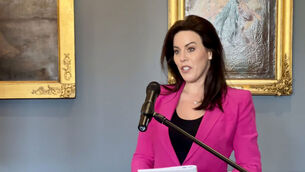
MacSharry says no softening stance on mortgage arrears
Mr MacSharry, a former Fianna Fáil finance minister, ruled out any blanket debt forgiveness in tackling the arrears crisis.
The Permanent TSB public interest director told the Oireachtas finance committee his bank would look at debt writedowns on a case-by-case basis but there would be no debt forgiveness.
“What I mean by a ‘debt writedown’ is that if somebody owes me €100 and they can only pay €80, they pay the €80 and after restructuring, they can pay another €10 in two or three years’ time. Then in another 20 years, we will see if they can pay the remaining €10. If they can’t, we look at a debt writedown.”
Committee member and Independent TD Stephen Donnelly said that even though he had supported the legislation when it was first proposed, he would be voting against the bill in the Dáil because of “deep concerns” about Mr MacSharry’s comments and similar remarks made by Bank of Ireland chief executive Richie Boucher on Monday.
Mr Donnelly cited the example of a constituent who had a €400,000 mortgage on a house worth €200,000. She could afford the capital and interest payments on a €250,000 mortgage.
The Wicklow TD said he had assumed that, under the personal insolvency legislation, after paying as much as she could over a three-year period, the debt would be written down to €250,000. But ultimately the banks had veto over whether this debt “would be surrendered”, he noted.
Mr MacSharry said his main priority as public interest director was that the bank should be solvent and to protect the taxpayer. If there was widespread debt forgiveness “then the bank would not be solvent”, he said.
Meanwhile, insolvency legislation passed through the Dáil and Seanad yesterday and will now be presented to President Michael D Higgins to sign.
The legislation, which reduces bankruptcy from 12 years to three, provides for the introduction of three new debt resolution processes:
* The debt relief notice will allow for the write-off of qualifying unsecured debt up to €20,000;
* The debt settlement arrangement provides for the agreed settlement of unsecured debt, with no limit involved;
* The personal insolvency arrangement will enable the agreed settlement of secured debt up to €3m.
CONNECT WITH US TODAY



Be the first to know the latest news and updates